Thumbnail and video credit: https://www.youtube.com/watch?v=LnXhjzS_i48
Artist credit: http://artof01.com/vrellis/index.html
This video will show you how geometric patterns, layered together, create our physical reality. This reality is formed from frequency, vibration, and energy. Each vibration has its own unique geometric pattern. Just 500 years ago, we deeply understood this principle, as it was evident in our architecture. You might be wondering, "Where am I going with this?" Consider the effect of certain frequencies when played through water. I'm here to remind you that every thought you have, every word you say, and every emotion you feel carries a vibrational frequency. Given that you're made up of 80% water, your thoughts, emotions, and words influence the geometric structures within the water molecules of your body, shaping your surrounding reality. Your mind is a powerful manifesting tool. All you need to do is align your mind with the frequency of your desires, and that becomes your reality. This is why it's called a “mindset."
0:00 Vibrations Shape Our Reality
1:03 The Fundamentals of Reality
3:22 The Human Perception - Light, Frequency, and Reality
6:22 Sacred Geometry - The Blueprint of Existence
9:14 The Geometry of Vibration
12:37 Nikola Tesla and the Power of Vibration
15:24 The Water Experiment and Human Composition
18:03 The Manifesting Power of Mind: From Thought to Reality
________________________________________________________________________
Speech by Video Advice
Footage provided by Storyblocks and Artgrid
Music provided by Epidemic Sound and Artlist
References used under Fair Use Law
________________________________________________________________________
📩 For any concerns or business inquiries, please get in touch with us at: videoadvice@yahoo.ro
AFFILIATE DISCLOSURE: there may be a few links in this description that, at no cost to you, will earn us a commission if you click them and purchase.
Don’t worry; we only recommend products we know and trust.
________________________________________________________________________
,video advice,video,advice,brain surgeon,banned brain surgeon,banned neurosurgeon,banned surgeon,banned surgeon revealing this,banned after revealing this,a6gYuFpZSKw,UCAwylBbx8RiRD3VsaYdwNTw, Health,Knowledge, channel_UCAwylBbx8RiRD3VsaYdwNTw, video_a6gYuFpZSKw,Elite Neurosurgeon Instantly Banned After Disclosing Controversial Findings to the Public.
Dr. Jack Kruse is a neurosurgeon who specializes in physics, light, magnetism, and electricity. Through his research, he has determined that modern medicine lacks a comprehensive understanding of how humans interact with the natural world.
👉🏼 Watch the full speech here: https://www.youtube.com/watch?v=d7qjh4BIGbc&t=6199s
👉🏼 Connect with Dr. Jack Kruse:
https://www.patreon.com/DrJackKruse
x - https://x.com/DrJackKruse
Instagram - https://www.instagram.com/drjackkruse
https://jackkruse.com/
________________________________________________________________________
Speaker: Dr. Jack Kruse
Footage provided by MotionArray and Artgrid
Music provided by Epidemic Sound and Artlist
References used under Fair Use Law
________________________________________________________________________
📩 For any concerns or business inquiries, please get in touch with us at videoadvice@yahoo.ro
,video advice,video,advice,phone cia,cia in your phone,cia is in your phone,cia won't talk about it,cia phone video,blue light cia phone,ll113whl41I,UCAwylBbx8RiRD3VsaYdwNTw, Society, channel_UCAwylBbx8RiRD3VsaYdwNTw, video_ll113whl41I,Discover the hidden truth behind "MK-Ultra 2.0" – a sinister technology allegedly weaponized to manipulate your mind through everyday screens. From CIA experiments to modern-day tech conspiracies, this video delves into the darker side of blue light, brain manipulation, and the ongoing legacy of MK-Ultra. Could the light from our devices be part of a covert agenda? Watch now to learn more about the science, the secrets, and the shocking connections behind this mysterious phenomenon.
👉🏼 Watch the full interview here at Danny Jones Podcast https://www.youtube.com/watch?v=SiBFtwbyv44&t=8972s and also watch the uncensored interview here https://www.patreon.com/dannyjones.
👉🏼 Connect with Dr. Jack Kruse:
https://www.patreon.com/DrJackKruse
x - https://x.com/DrJackKruse
Instagram - https://www.instagram.com/drjackkruse
https://jackkruse.com/
References:
https://www.cia.gov/readingroom/collection/project-mkultra
https://pmc.ncbi.nlm.nih.gov/articles/PMC4989256/
https://pmc.ncbi.nlm.nih.gov/articles/PMC8322268/
https://thedebrief.org/researchers-achieve-mind-control-using-only-light/
https://en.wikipedia.org/wiki/MKUltra
https://braininitiative.nih.gov/
________________________________________________________________________
Speaker: Dr. Jack Kruse
Script and Narration by Video Advice
Footage provided by MotionArray and Artgrid
Music provided by Epidemic Sound and Artlist
References used under Fair Use Law
________________________________________________________________________
📩 For any concerns or business inquiries, please get in touch with us at videoadvice@yahoo.ro
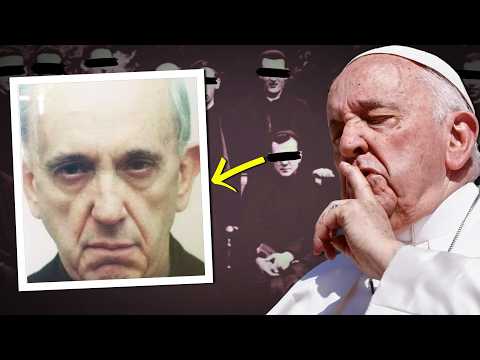
,1,Dive into the shadows of the Vatican and uncover the enigmatic world of Opus Dei. In this video, we explore the Vatican's secret archives, delve into the most guarded secrets of the Holy See, and expose the hidden truths that have been kept from the public for centuries. Featuring insightful excerpts from Jordan Maxwell, join us on this thrilling journey through history, power, and mystery.
________________________________________________________________________
Voiceover by Video Advice
Speaker: Jordan Maxwell - https://jordanmaxwellshow.com/
Footage provided by Storyblocks and Artgrid
Music provided by Epidemic Sound and Artlist
References used under Fair Use Law
________________________________________________________________________
📩 For any concerns or business inquiries, please get in touch with us at videoadvice@yahoo.ro
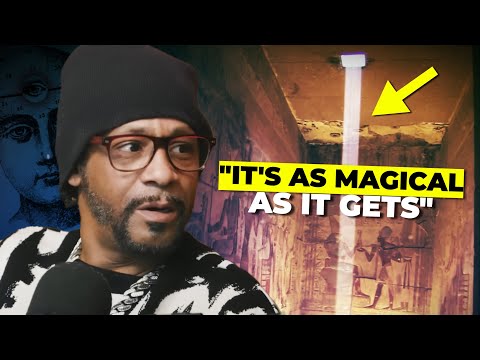
,1,You won’t believe what Katt Williams just revealed! He’s unlocking ancient secrets and dropping knowledge bombs that will leave you stunned. From Nikola Tesla and where he took his knowledge from to the mysterious device the Annunaki wear on their wrists, to the real purpose of the pyramids and hidden technologies, this video has it all. Stay tuned till the end—you don't want to miss a single detail. Let's dive in and uncover what Katt has to share!
Excerpts Taken From: https://www.youtube.com/watch?v=1zb2SuW-jug&t=9522s
All credits go to the Joe Rogan Podcast and its guest, Katt Williams.
________________________________________________________________________
Voiceover by Video Advice
Speaker: Katt Williams
Footage provided by Storyblocks and Artgrid
Music provided by Epidemic Sound and Artlist
References used under Fair Use Law
________________________________________________________________________
📩 For any concerns or business inquiries, please get in touch with us at videoadvice@yahoo.ro
,1,Check out the full video 👉🏼 https://www.youtube.com/watch?v=5qZI0QaCI14&t=126s
If you've also wondered what Terrence Howard was talking about regarding the periodic table of elements, suggesting that it's incorrect and instead advocating for Walter Russell's complete version, this video will dive deep into Walter Russell's writings and papers. Please bear in mind that when Russell presented his work to Nikola Tesla, Tesla suggested hiding this information for 1000 years because humanity was not ready for it. Thus, Terrence could be one of those geniuses we only truly appreciate after their time-a recognition not yet realized.
Excerpts Taken From: https://www.youtube.com/watch?v=g197xdRZsW0
All credits go to the Joe Rogan Podcast and its guest, Terrence Howard.
Check out Terrence Howard's book, which he generously made free and available to everyone. Get the book here: https://tcotlc.com/
✅ Explore Terrence Howard's groundbreaking work and dive deeper into his insights by following his journey.
👉🏼 https://www.terryslynchpins.com/
👉🏼 https://www.youtube.com/@thpdevelopmentvideos6793
👉🏼 https://www.youtube.com/@thelynchpinproject7779
________________________________________________________________________
Voiceover by Video Advice
Speaker: Terrence Howard
Footage provided by Storyblocks and Artgrid
Music provided by Epidemic Sound and Artlist
References used under Fair Use Law
________________________________________________________________________
📩 For any concerns or business inquiries, please get in touch with us at videoadvice@yahoo.ro
,Free Energy,Perpetuum mobile,diy,diy infinite energy,energia libre,free energy generator with dc motor,free energy with alternator,generate,how to get free energy with motor,how to make free energy generator with dc motor,how to make free energy with motor,infinite energy generator,magnetmotor,oscillating magnet,energy,how to generate,free energy generator,generator,electric generator,free energy motor,flywheel free energy generator,new,220 volts,110 volts,JxVyc7jlTJ4,UC9HFMty5k4jdj36wV4E4Iuw, Hobby,Lifestyle_(sociology), channel_UC9HFMty5k4jdj36wV4E4Iuw, video_JxVyc7jlTJ4,I Turn a CAR ALTERNATOR into an INFINITE ENERGY GENERATOR - LIBERTY ENGINE 4.0
Thanks for watching!!!
__________________
INDEX:
00:00:00 Introduction
00:17:00 Disassembling the alternator.
01:13:00 We modified the rotor.
01:46:00 We mount the special piece.
02:09:00 We glue the N52 Neodymium magnets.
02:41:00 We compact the rotor with epoxy resin.
04:17:00 We rectify the rotor to balance it.
04:36:00 We clean all the rotor parts.
04:56:00 We make the supports for the alternator and the engine.
05:45:00 We mount the alternator.
07:12:00 We solder the alternator cables.
09:40:00 We convert a three-phase motor into a single-phase motor.
12:36:00 We mount our new Liberty Engine.
19:43:00 Electrical connections.
21:15:00 Test run
26:44:00 Thank you!
__________________
- To become a member of the channel, click on the following link:
💥 https://www.youtube.com/channel/UC9HFMty5k4jdj36wV4E4Iuw/join
- You can also collaborate with our projects by purchasing a product from our store:
💥 https://www.youtube.com/@HiddentechnologyYT/store
We want to thank all the members of our channel, but especially the "Elite members" :
- harpinKeith
- Environment Energy
- Brian Lanehart
THANK YOU FOR YOUR SUPPORT!
_________________
Warning: The use, copying, manipulation or transmission of this video or part of it without the consent of the author is strictly prohibited. This video is protected by copyright.
USED MATERIALS:
- Three-phase electric motor: https://amzn.to/42InleK
- Timing pulley: https://s.click.aliexpress.com/e/_EzfslJL
- Timing belt: https://amzn.to/3A2M9nP
- Truck alternator: https://amzn.to/42BOZdb
- Magnetic pole identifier: https://amzn.to/3SHywPY
- Epoxy resin: https://amzn.to/3UAjTAJ
- Cyanoacrylate Glue: https://s.click.aliexpress.com/e/_EjyBQ6d
- Three-phase switch: https://amzn.to/3SXeG4y
- Power strip: https://amzn.to/49f0Mk3
- Rubber feet: https://amzn.to/49C69th
- Manual starter: https://amzn.to/3uIFTi9
_____________________________________
Business: libertyenginebusiness@gmail.com
_____________________________________
HOW WE RECORD OUR VIDEOS
- Sony RX10 IV: https://amzn.to/3HnF69l
- GoPro HERO11: https://amzn.to/3Hm0BHz
- Insta360 One RS Twin Edition: https://amzn.to/3Oaalbo
- iPhone 15 Pro Max: https://amzn.to/3U6TJ8h
- 72" Aluminum Tripod: https://amzn.to/48G1FBX
- Smartphone Tripod: https://amzn.to/3HrCKpI
- Screen batteries: https://amzn.to/3IgeoRt
- Screen for Sony camera FEELWORLD F5 Pro V4: https://amzn.to/3SpfOhc
- Articulated arm: https://amzn.to/3S32BcI
- HDMI adapter for iPhone: https://amzn.to/3vH5dFz
- Bresser Pantograph F001483: https://amzn.to/3MUW16t
- Microphone BOYA: https://amzn.to/48G2omF
- Illumination spotlight kit: https://amzn.to/3O5OJx5
Free Energy,Perpetuum mobile,diy,diy infinite energy,energia libre,free energy generator with dc motor,free energy with alternator,generate,how to get free energy with motor,how to make free energy generator with dc motor,how to make free energy with motor,infinite energy generator,magnetmotor,oscillating magnet,energy,how to generate,free energy generator,generator,electric generator,free energy motor,flywheel free energy generator,new,220 volts,110 volts,liberty engine
,1,Russian T-72 is destroyed by units of 53rd Mechanized Brigade
#dailymail #russia #ukraine
Daily Mail Website: https://www.dailymail.co.uk
Daily Mail Facebook: https://facebook.com/dailymail
Daily Mail IG: https://instagram.com/dailymail
Daily Mail Snap: https://snapchat.com/discover/Daily-Ma...
Daily Mail Twitter: https://twitter.com/MailOnline
Daily Mail Pinterest: https://pinterest.co.uk/dailymail
Get the free Daily Mail mobile app: https://dailymail.co.uk/mobile
,1,Three American soldiers lost their lives at the hands of Iranian-backed forces, and White House press secretary Karine Jean-Pierre is facing backlash online after she said, "Heartfelt condolences go out to the families who lost three brave folks who are military folks who are brave who are always fighting and are fighting on behalf of this administration." When will this administration properly honor our fallen heroes?
► Watch MORE BlazeTV YouTube Videos: https://bit.ly/3EVRJHP
► Visit the BRAND NEW Ad-Free 'Blaze News' Website: https://www.theblaze.com/
► Subscribe to BlazeTV YouTube! https://bit.ly/2KJHuwu
► Join BlazeTV! https://get.blazetv.com/
► Grab some sweet Blaze Media merch here: https://shop.blazemedia.com/
► Sign up for our NEWSLETTER: https://www.theblaze.com/newsletters/theblaze
Connect with us on Social Media:
http://x.com/BlazeTV
http://x.com/TheBlaze
http://instagram.com/TheBlazeTV
http://facebook.com/BlazeMedia
#blazetv #patgray #karinejeanpierre #kjp #whitehousepresssecretary #bidenadministration #bidenadmin #news #politics #politicalnews
,1,China's growth engines seem to be slowing due to a range of factors, including an ageing population, a slowdown in productivity, and major challenges facing the private sector.
Rather than seeking a quick boost, how can a focus on high-quality development strengthen its economic fundamentals, recharge growth and enable it to avoid the middle-income trap in the long term?
The World Economic Forum is the International Organization for Public-Private Cooperation. The Forum engages the foremost political, business, cultural and other leaders of society to shape global, regional and industry agendas. We believe that progress happens by bringing together people from all walks of life who have the drive and the influence to make positive change.
The 54th Annual Meeting of the World Economic Forum will provide a crucial space to focus on the fundamental principles driving trust, including transparency, consistency and accountability.
This Annual Meeting will welcome over 100 governments, all major international organizations, 1000 Forum’s Partners, as well as civil society leaders, experts, youth representatives, social entrepreneurs, and news outlets.
The World Economic Forum is the International Organization for Public-Private Cooperation. The Forum engages the foremost political, business, cultural and other leaders of society to shape global, regional and industry agendas. We believe that progress happens by bringing together people from all walks of life who have the drive and the influence to make positive change.
World Economic Forum Website ► http://www.weforum.org/
Facebook ► https://www.facebook.com/worldeconomicforum/
YouTube ► https://www.youtube.com/wef
Instagram ► https://www.instagram.com/worldeconomicforum/
Twitter ► https://twitter.com/wef
LinkedIn ► https://www.linkedin.com/company/world-economic-forum
TikTok ► https://www.tiktok.com/@worldeconomicforum
Flipboard ► https://flipboard.com/@WEF
#Davos2024 #WorldEconomicForum #wef24
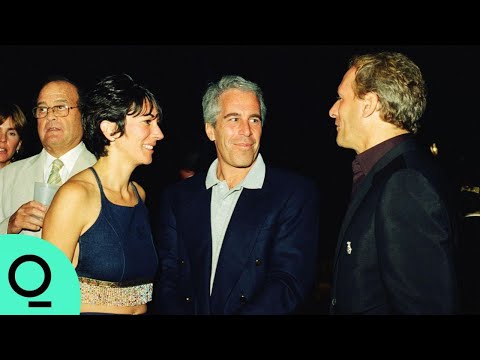
,1,Several previously confidential documents related to Jeffrey Epstein were made public in federal court in New York after a yearslong battle over their release.
The highly anticipated release of documents tied to the Epstein saga failed to produce any bombshells, but offered fresh insight into the financier’s lifestyle and the people who surrounded him.
The names of two former presidents, a member of the UK royal family and celebrities were among the unredacted information.
https://trib.al/QXzVNWY
--------
Subscribe to our YouTube channel: https://trib.al/KM4k5RA
Subscribe to Bloomberg Originals: https://trib.al/dJv9Uw8
Bloomberg Quicktake brings you global social video spanning business, technology, politics and culture. Make sense of the stories changing your business and your world.
Connect with us on…
YouTube: https://www.youtube.com/user/Bloomberg
Breaking News on YouTube: https://www.youtube.com/@BloombergQuicktakeNow
,1,Thumbnail and video credit: https://www.youtube.com/watch?v=LnXhjzS_i48
Artist credit: http://artof01.com/vrellis/index.html
This video will show you how geometric patterns, layered together, create our physical reality. This reality is formed from frequency, vibration, and energy. Each vibration has its own unique geometric pattern. Just 500 years ago, we deeply understood this principle, as it was evident in our architecture. You might be wondering, "Where am I going with this?" Consider the effect of certain frequencies when played through water. I'm here to remind you that every thought you have, every word you say, and every emotion you feel carries a vibrational frequency. Given that you're made up of 80% water, your thoughts, emotions, and words influence the geometric structures within the water molecules of your body, shaping your surrounding reality. Your mind is a powerful manifesting tool. All you need to do is align your mind with the frequency of your desires, and that becomes your reality. This is why it's called a “mindset."
0:00 Vibrations Shape Our Reality
1:03 The Fundamentals of Reality
3:22 The Human Perception - Light, Frequency, and Reality
6:22 Sacred Geometry - The Blueprint of Existence
9:14 The Geometry of Vibration
12:37 Nikola Tesla and the Power of Vibration
15:24 The Water Experiment and Human Composition
18:03 The Manifesting Power of Mind: From Thought to Reality
________________________________________________________________________
Speech by Video Advice
Footage provided by Storyblocks and Artgrid
Music provided by Epidemic Sound and Artlist
References used under Fair Use Law
________________________________________________________________________
📩 For any concerns or business inquiries, please get in touch with us at: videoadvice@yahoo.ro
AFFILIATE DISCLOSURE: there may be a few links in this description that, at no cost to you, will earn us a commission if you click them and purchase.
Don’t worry; we only recommend products we know and trust.
________________________________________________________________________