How Big is The Universe?
We begin at the familiar blue and green orb we call home and zoom out to explore the vastness of space. From the Moon, our closest cosmic neighbor, to the edges of the observable universe, prepare to be astonished by the sheer scale of everything that exists.
Travel with us as we venture past the Moon, understanding its distance in terms we can grasp. Witness the Sun, not just as a source of light, but as a milestone in the vastness of our solar system. We don't stop there; Mars, Neptune, and the outer reaches of our solar neighborhood await.
Discover the awe-inspiring distances to the Voyager 1 probe, the enigmatic Oort Cloud, and the neighboring star system of Alpha Centauri. As we sail through the Milky Way, understand our position in the grand scheme of things, where our entire history is just a whisper in the cosmic wind.
Our voyage takes us further, to the Local Group, Virgo Supercluster, and the staggering Laniakea Supercluster. We contemplate the Great Attractor's pull and our place in this immense heaven.
Confront the boundaries of the observable universe and ponder the mystery of what lies beyond. This video is not just a journey through space but a journey of perspective. Join us in marveling at the universe's grandeur and our humble place within it.
Subscribe to Science Time: https://www.youtube.com/sciencetime24
#universe #sciencetime #space
,1,The terrifying true scale of modern nuclear weapons is beyond what most people can imagine. Nuclear Weapons today are far more powerful than those used in World War II. For example, the B83 nuclear bomb, the largest in the U.S. arsenal, is 80 times more powerful than the bomb dropped on Hiroshima. This single Nuclear Weapon could destroy an entire city like Beijing, causing millions of deaths and injuries.
Submarine-launched missiles like the Trident II carry multiple Nuclear Weapons. Each missile can deliver up to eight warheads, each 30 times more powerful than the Hiroshima bomb. A single Trident II could devastate a city like Moscow, resulting in over 2.8 million immediate fatalities.
China's Dongfeng 5 missile is another example of the terrifying power of Nuclear Weapons. It can carry up to 12 warheads, each 66 times more powerful than the Hiroshima bomb. If aimed at a city like Washington, D.C., the impact would be catastrophic, with over a million fatalities.
Russia's R-36 missile, known as the "Satan" missile, can carry multiple Nuclear Weapons with immense destructive power. Some versions can deliver a single warhead up to 20 megatons, which is over 1,300 times the Hiroshima bomb.
At the top of the list is Russia's RS-28 Sarmat missile, nicknamed "Satan 2." This Nuclear Weapon can carry up to 15 warheads and potentially deliver a 50-megaton bomb, causing unimaginable destruction to cities like New York.
Even though some countries may face setbacks, the existence of these Nuclear Weapons means that even a few could cause unimaginable damage. The true scale of modern Nuclear Weapons shows that in a nuclear war, there are no winners—only devastating loss for humanity.
Sources:
https://nuclearsecrecy.com/nukemap/
U.S. Department of Energy https://www.energy.gov/
National Museum of the U.S. Air Force https://www.nationalmuseum.af.mil/
https://en.wikipedia.org/wiki/Nuclear_weapon
Subscribe to Science Time: https://www.youtube.com/sciencetime24
#nukes #sciencetime #nuclearwinter
,1,Why It's Impossible to Escape North Korea: It's nearly impossible to believe that a country like North Korea exists in the modern world. Over 26 million people are trapped and essentially held hostage by a brutal one-party totalitarian dictatorship. Kim Jong Un, the supreme leader of North Korea, is worshipped by millions as a deity. He rules with absolute power, using propaganda and an iron grip on information to control the population. This leaves the outside world to piece together the unbelievable harsh reality of life within North Korea's borders.
The history of Korea leading to the division into North and South is marked by both ancient traditions and modern geopolitical pressures. Originally a unified kingdom for over a millennium, Korea was annexed by Japan in 1910, leading to a harsh period of colonial rule until Japan's defeat in World War II in 1945.
Post-WWII, Korea was divided at the 38th parallel into two zones of occupation with the Soviet Union taking control of the north and the United States taking the south.
In 1948, separate governments were established in each zone: the Democratic People's Republic of Korea led by Kim Il-Sung under Soviet influence, and the Republic of Korea supported by the United States. The Korean War from 1950 to 1953 followed with North Korea invading the South, aiming for reunification under communist rule. The conflict ended with an armistice in 1953, but no peace treaty was signed, leaving the two Koreas officially at war to this day.
But how did North Korea become known as the most oppressive dictatorship in modern history?
Subscribe to Science Time: https://www.youtube.com/sciencetime24
#northkorea #sciencetime #escapenorthkorea
,1,These are the events that will happen before 2045.
If we don't blow ourselves up, if an asteroid doesn't strike us down, if a virus doesn't eradicate the human species, or if any other catastrophic event, whether manmade or natural, doesn't occur, it's extremely likely that technological progress will not only continue, but accelerate.
What will life be like, in 2045? "Prediction is very difficult, especially, if it's about the future." This quote, often attributed to Niels Bohr, captures the essence of our challenge when trying to foresee the events that will happen before this seemingly arbitrary year.
So, what's so special about 2045? Why not try predicting events in 2050, or 2100?
In a post-AGI world, if humans are still part of it, it will most certainly mean we have solved the AI alignment problem. A machine capable of outmatching any human in intelligence will create the blueprint for the machine that makes the next machine to achieve any of its goals.
Automation will skyrocket, leading to what is called a "post-work society," where machines perform every mundane and even intellectual task. Any existing job will be performed much better by a machine, potentially leading to widespread unemployment.
Even intellectual tasks will be outstripped by AI. Obviously, such an intelligent AGI will also be used for good, such as solving complex societal problems like disease.
But even if we solve the AI alignment problem, our current political system will need drastic changes to counter the effects of a few companies owning AGI, creating trillions of dollars in wealth while the rest of society is left to starve.
A sort of wealth redistribution system, perhaps even devised by AGI, will need to be enacted to address every job being lost to machines.
But even if this political system problem is solved, some critics argue that this would create a false Utopia, as many of the now 8 billion-plus free of disease tourists who play Frisbie all the time, still find meaning in their work.
Subscribe to Science Time: https://www.youtube.com/sciencetime24
#AI #sciencetime #AGI
,1,JWST Reveals a Treasure Trove of Images Showcasing Spiral Galaxies #jwst #astronomy #universe
The James Webb Space Telescope has delivered a stunning array of images, featuring 19 face-on spiral galaxies in near- and mid-infrared. These high-resolution portraits reveal the galaxies' intricate structures, showcasing stars, gas, and dust with unprecedented clarity.
This collection, the most detailed of its kind beyond the Milky Way, is a goldmine for researchers. Teams are analyzing these images to understand the formation and evolution of spiral galaxies. Their findings will enhance simulations and theories about star formation, offering significant insights into galactic evolution. This breakthrough in astronomy marks a pivotal step forward in our understanding of the universe.
,1,How Big is The Universe?
We begin at the familiar blue and green orb we call home and zoom out to explore the vastness of space. From the Moon, our closest cosmic neighbor, to the edges of the observable universe, prepare to be astonished by the sheer scale of everything that exists.
Travel with us as we venture past the Moon, understanding its distance in terms we can grasp. Witness the Sun, not just as a source of light, but as a milestone in the vastness of our solar system. We don't stop there; Mars, Neptune, and the outer reaches of our solar neighborhood await.
Discover the awe-inspiring distances to the Voyager 1 probe, the enigmatic Oort Cloud, and the neighboring star system of Alpha Centauri. As we sail through the Milky Way, understand our position in the grand scheme of things, where our entire history is just a whisper in the cosmic wind.
Our voyage takes us further, to the Local Group, Virgo Supercluster, and the staggering Laniakea Supercluster. We contemplate the Great Attractor's pull and our place in this immense heaven.
Confront the boundaries of the observable universe and ponder the mystery of what lies beyond. This video is not just a journey through space but a journey of perspective. Join us in marveling at the universe's grandeur and our humble place within it.
Subscribe to Science Time: https://www.youtube.com/sciencetime24
#universe #sciencetime #space
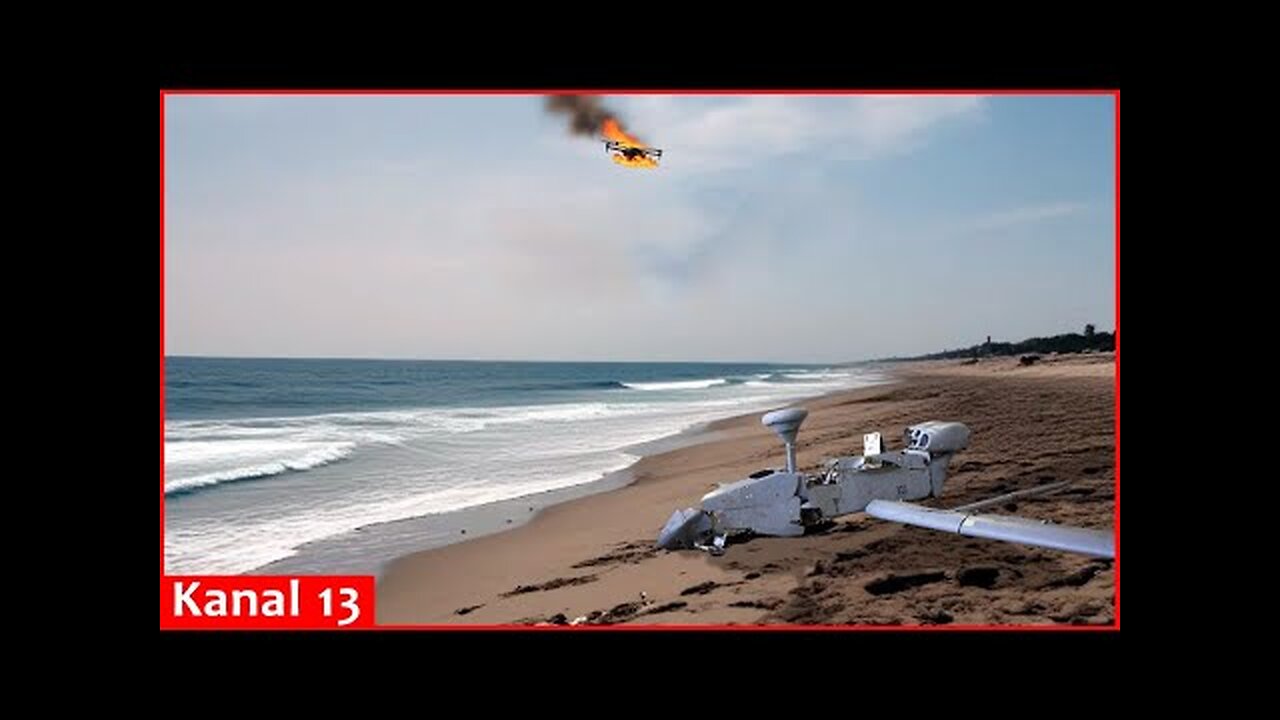
Anti-aircraft gunners of the Ukrainian Armed Forces destroyed a high-end Russian drone over the Black Sea, the local Air Force command posted to social media. The downed UAV was identified as a Forpost, a Russian-made attack and reconnaissance drone, originally based on Israeli designs for the Searcher, updated to resemble the Turkish-made Bayraktar, and estimated to cost $7 million. “On 1 April 2024, the soldiers of the Odesa anti-aircraft missile brigade destroyed a Russian Forpost attack and reconnaissance UAV in the Black Sea,” the Air Force wrote. According to Illia Yevlash, spokesperson for the Air Force Command, as quoted by Ukrainska Pravda, the Forpost drone is one of the most expensive in the world, able to carry two missiles or other air-to-ground weapons. “The Air Force downed a pretty good target. We don't shoot down targets like that very often, but we managed to hit one of the most expensive attack drones, of the Forpost type,” he said. “This is a Russian UAV, worth about seven million dollars.” One of the country's most expensive reconnaissance tools, Forpost drones first came to prominence in the 1980s as the default remote surveillance craft of the Israeli army before its export to a number of foreign powers across Asia and Europe. While typically unarmed, Russia has used armed versions of the drone in combat operations in the past, though the drones are now primarily used for surveilling enemy positions on the battlefield. The weapons have also been deployed in Syria. The Defense Ministry of Russia reported that Forpost trained interaction with submarines. Black Sea fleet drones detected warships and transmitted coordinates to the Kolpino diesel-electric submarine. It delivered a conditional strike with Kalibr missiles. earlier, Forpost of the Baltic fleet trained in Kaliningrad region to detect targets and adjust fire of naval artillery. The Defense Ministry said the drones transmitted target and fire information by digital channels in real time from an altitude of several kilometers.