Want to support this channel and help us preserve old films? Visit https://www.patreon.com/PeriscopeFilm
Visit our website www.PeriscopeFilm.com
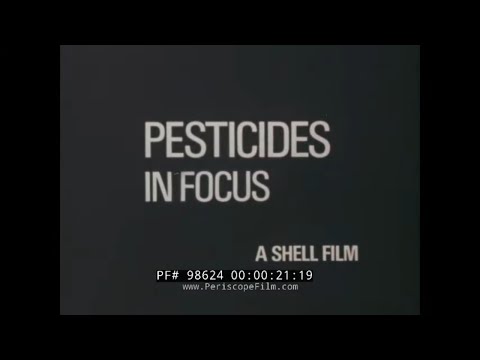
This color educational film is about pesticides. The film was produced by Shell and made in 1971. It was directed by Richard Bigham and Richard Q. McNaughton, and was originally distributed by the Shell Corporation's Agricultural Division. The film shows the development of new pesticides and their benefits, and examines the process of developing data so that pesticides can be approved by the Environmental Protection Agency (EPA).
Opening titles: A Shell Film. Pesticides In Focus (:06-:36). Mountain view. Horses plow a field. People pick from muddy fields. Women pick grapes from grape vines. A woman plays with flour as he baby is on her back. Cities from all over the world - life is the city. Cars, people, tall buildings. Lots of people walking around. Plowing tractors go through wheat in a field (:37-2:43). Trees are knocked down in the forest. Animals flee as man creeps closer with their modern cities. People cut and pick crops in the fields. Corn has pests on it. Close on insects and larva as they threaten everything man grows. Field. People walk around near crops. Men spray crops and plants. Pesticides are sprayed by men onto the crops. A low flying small plane sprays crops. Damaged crop falls over. A man shakes an orange tree to collect the oranges. People cut the crops and cultivate them (2:44-5:25). Men spray pesticides in a village on sides of buildings. Men in all sorts of countries use pesticides and spray them. Aerial shot of a village town. A man sprays a lake with pesticides to get rid of gnats. Fish in the water, birds go after fish. A man on a boat. Food is served in a restaurant. A man brings a turkey to a table and starts to carve it. Animals in the wild. Insects attack a caterpillar. Coffee plantation. Ladybugs were used to kill the insects that were harming the coffee crop. Screw worms are bred in a factory, they live on flesh. Cows graze as do sheep. Screw worms like livestock. A man sterilizes screwworms and puts them in boxes, their eggs will never hatch. A plane flies high over crop. Cows rounded up (5:26-9:34). Bulls go in the water. Crops in the breeze. Lettuce crop, apple tree. A man sprays pesticides on leaves. A scientist works in a laboratory. A bunch of buildings where the scientists work. Chemists and scientists walk around and into a room a man starts looking at something. A scientist puts some insects into a jar with a plant. A man tests a pesticides spray. Bean leaves are being sprayed with a new type of pesticide (9:35-12:50). Jars hold leaves and the test pesticide. A mouse is given a test to see how a mammal reacts to it. Plants. Plants are sprayed on a conveyor belt. Soil is sprayed with a new pesticide to see how it reacts. Treated soil is given to earthworms to see how they react. Some pesticide is placed in water with fish. Bees are also experimented with. Birds eat from their feed. Those conducting the test do a test outside in the field by spraying crop. Some of the soil is picked up to be tested (12:51-16:11). Scientist does a check of the soil and a computer records his results. A toxicologist looks at the mammals that have been tested on. Another examines a rat to see how they have reacted to it. More rats and their offspring are looked at. Rat urine is looked at for damage to the kidneys (16:12-17:55). Rat blood is reviewed as well. Laboratory volunteers inhale pesticides. Tests are analyzed and recorded to see how those are reacting. Researchers review their data on computers. A helicopter sprays pesticides onto crops. A truck sprays the pesticides onto the crop as it drives through them. Computer prints paperwork. A man in the field observes. Some samples of soil are removed. Leaves are looked at in the field outside. A booklet called 'Petition for Tolerances' is printed out en masse. The booklets are placed into a larger bound volume and stored away. A government agency reviews the testing procedures and evidence at the trials. The men discuss around a table (17:56-21:15). A farmer uses a machine to gather his oranges. A man collects some oranges and bags them, taking them away for review. Men have medical examinations when they work at the plant. Computer data is reviewed. A doctor looks over an x-ray and then jots down his conclusions. Men plow the fields by hand. Corn is cooked and served. People eat food. A woman gathers food. Birds fly around near the water. Locusts swarm and a child runs through the swarm
(21:16-24:01). End credits (24:02-24:10).
This film is part of the Periscope Film LLC archive, one of the largest historic military, transportation, and aviation stock footage collections in the USA. Entirely film backed, this material is available for licensing in 24p HD, 2k and 4k. For more information visit http://www.PeriscopeFilm.com
,Periscope Film,Stock Footage,4K,HD,2K,16mm film,8mm film,35mm film,film transfer,PeriscopeFilm,WWII stock footage,motion picture film scanning,16mm film scanning,Lasergraphics,ScanStation,Los Angeles,6BiGdJBDy5g,UCddem5RlB3bQe99wyY49g0g, Film, channel_UCddem5RlB3bQe99wyY49g0g, video_6BiGdJBDy5g,Join this channel to get access to perks:
https://www.youtube.com/channel/UCddem5RlB3bQe99wyY49g0g/join
Want to learn more about Periscope Film and get access to exclusive swag? Join us on Patreon. Visit https://www.patreon.com/PeriscopeFilm
Visit our website www.PeriscopeFilm.com
“In All the World…” is a 1940s color promotional film highlighting Great Northern Railway’s service from Chicago to Glacier National Park and beyond to Seattle and Portland. Narrated by James F. Clemenger, the film highlights one of the stops along the Great Northern Railway route - Glacier National Park and Waterton Lakes National Park across the international boundary in Alberta, Canada. Specifically, the film follows a group of travelers who have arrived on the Empire Builder luxury train from Chicago as they explore the natural wonders that the park has to offer.
Upbeat music, footage opens to spinning globe and opening credits (0:10). Narration begins, globe stops spinning and camera zooms into United States (0:42). Great Northern Railway route appears on map spanning Chicago, St. Paul, Minneapolis, Glacier National Park (Montana), Spokane, Seattle, Portland, San Francisco, Los Angeles (0:49). White water waterfall rushes through rocky cliffs lined with pine trees, montage scenic nature shots around the national park (1:11). Great Northern 2584 Steam Locomotive pulls into East Glacier Park station: Passengers disembark Empire Builder, greeted by members of Blackfeet Nation (1:36). Glacier Park Lodge, visitors walk through beautiful, manicured grounds (2:36). Reception area of lodge, constructed out of dark timber (3:22). 1936 White Model 706 Glacier National Park Tour Buses depart lodge for excursion, vivid orange color contrasts dark greens and browns of rugged nature (3:59). Trick Falls (4:55). Two Medicine Chalet on shore of Two Medicine Lake, view of rugged peak of Mount Rockwell (5:26). Glacier Park Boat Company tour of lake on historic wooden boats (6:05). Twin Falls (6:32). Round of golf at Glacier Park Hotel (7:12). After dinner, hotel guests dance to live band (7:49). Group head out on horseback for camping, exploration of park (8:27). Blackfoot Indians wearing traditional dress partake in ceremonial dances, guests talk with tribe members and learn about their history (8:52). Tour bus drives up Medicine Valley, view of Rising Wolf Mountain (10:39). Trees frame lookout view point of Cut Bank Valley (10:50). Divide Mountain (on Hudson Bay Divide) (10:57). Lower St. Mary Lake (11:20). Sign Waterton Lakes National Park, Canadian customs (11:40). Prince of Wales Hotel, Mount Crenel behind (12:02). View from lobby of Waterton Lake surrounded by Canadian Rockies, Mount Cleveland (12:20). Sightseeing cruise on Waterton Lake (12:58). Goat Haunt Camp (13:30). Cameron Falls (14:22). Kids play in horse-drawn carts (14:51). Women fawn over “Mountie” (Royal Canadian Mounted Police) (15:08). Our Lady of Mount Carmel Catholic Church (Waterton first Catholic Church) (15:15). United States Customs (16:02). Tour bus travels along banks of Swiftcurrent River (16:30). Government check-in station (16:36). Swiftcurrent Falls (17:13). Vantage point on top of Mount Elton, overlooking Swiftcurrent Lake, Many Glacier Hotel, Lake Josephine, Grinnell Lake (17:19). Visitors relax on porch of Many Glacier Hotel, other activities: Fishing in Swiftcurrent Lake, cold plunge and swim in waters (17:44). Hike through forest to Lake Josephine, view of Grinnell Glacier (19:30). Young women feed, play with squirrels (20:16). Guests dress up in cowboy regalia, head out for Grinnell Glacier on horseback (21:11). Mount Gould (22:03). Jade-green water of Grinnell Lake (22:59). Group stops and eats packed lunch, continues on rest of trail on foot (23:58). Close-up glacial mud (24:42). Snowball fight on top of glacier (25:14). Tour bus drives along Going-to-the-Sun Road, view St. Mary Lake and Divide Mountain in distance (26:14). Mount Citadel (26:56). Going-to-the-Sun Mountain (27:03). Other group heads out for trail ride through Gunsight Pass to Lake McDonald (27:46). Yellow, red seep monkeyflowers (28:32). Tour buses exit tunnel on Going-to-the-Sun Road (29:07). St. Mary Valley, Mount Morgan (29:32). Logan Pass (29:53). Lake McDonald Hotel (31:18). Waterskiing on lake, swimming (31:47). Mount Cannon (32:24). Tour buses take guests to Belton Railway Station at Western Gateway to Glacier Park (33:12). Empire Builder departs Belton for Pacific Northwest (33:49). Great Northern Railway logo with goat (34:15). Film ends (34:26).
If you have endangered films, we'd love to hear from you. Contact us via the weblink below.
This film is part of the Periscope Film LLC archive, one of the largest historic military, transportation, and aviation stock footage collections in the USA. Entirely film backed, this material is available for licensing in 24p HD, 2k and 4k. For more information visit http://www.PeriscopeFilm.com
,1,Glenn Beck reveals leaked internal messages between the members of Target’s “Pride + Business Council” that took place during last year's boycott. Target went off the rails last Pride Month and offered “tuck-friendly” bathing suits, chest binders, and transgender-themed merchandise for children. Americans responded with a boycott that sent Target running back into the closet. Thanks to an employee from Target corporate who wished to stay anonymous, Glenn exposes for the first time ever the radical response of Target employees, including a witch hunt that ensued when certain employees defended Target’s rollback of controversial LGBTQ+ merchandise as a reasonable business move. In the end, Target leadership received a list of demands from employees that included a call for Target to bring back the merchandise that started the controversy in the first place. Despite the internal pressure, Target toned down its Pride collection this year. Should reasonable Americans take the win, or is there yet another battle for the culture just around the corner?
EdenPURE - Claim your EdenPURE Thunderstorm and rid odors NOW. Go to https://edenpure.com/beck and use discount code BECK to save $200.
► Click HERE to subscribe to Glenn Beck on YouTube: https://bit.ly/2UVLqhL
► Click HERE to subscribe to BlazeTV: get.blazetv.com/glenn
► Click HERE to subscribe to BlazeTV YouTube: https://www.youtube.com/channel/UCKgJEs_v0JB-6jWb8lIy9Xw?sub_confirmation=1
► Click HERE to sign up to Glenn's newsletter: https://www.glennbeck.com/st/Morning_Brief
Connect with Glenn on Social Media:
http://twitter.com/glennbeck
http://instagram.com/glennbeck
http://facebook.com/glennbeck
,1,Under the Biden administration, traditionalist Catholics and conservative Christians of all kinds have increasingly become targets of the government. And some churches themselves are also starting to turn on traditionalist Christians. So, how should people of faith respond to this increase in persecution from outside AND within the Church? Glenn speaks with former presidential speechwriters Alex Torres and Joshua Charles, who have co-authored a new book, "Persecuted from Within." They argue that modern-day Christians should learn from those who came before them. And they also discuss the recent removal of Catholic Bishop Joseph Strickland by the Pope and how bizarre it is that Joe Biden — our second Catholic president — is targeting Catholics.
► Click HERE to subscribe to Glenn Beck on YouTube: https://bit.ly/2UVLqhL
► Click HERE to subscribe to BlazeTV: get.blazetv.com/glenn
► Click HERE to subscribe to BlazeTV YouTube: https://www.youtube.com/channel/UCKgJEs_v0JB-6jWb8lIy9Xw?sub_confirmation=1
► Click HERE to sign up to Glenn's newsletter: https://www.glennbeck.com/st/Morning_Brief
Connect with Glenn on Social Media:
http://twitter.com/glennbeck
http://instagram.com/glennbeck
http://facebook.com/glennbeck
,1,The chaos of 2023 reminds Glenn a lot of the chaos of the 1970s: economic turmoil, despair, an energy crisis, rampant crime. In the 70s, many people stopped believing in America. But in 1978, Glenn heard something that he believes still rings true: Aaron Copland's "Lincoln Portrait," featuring Henry Fonda. After re-listening to it, Glenn used it as a model and rewrote the speech in his own words for our time.
► Click HERE to subscribe to Glenn Beck on YouTube: https://bit.ly/2UVLqhL
► Click HERE to subscribe to BlazeTV: get.blazetv.com/glenn
► Click HERE to subscribe to BlazeTV YouTube: https://www.youtube.com/channel/UCKgJEs_v0JB-6jWb8lIy9Xw?sub_confirmation=1
► Click HERE to sign up to Glenn's newsletter: https://www.glennbeck.com/st/Morning_Brief
Connect with Glenn on Social Media:
http://twitter.com/glennbeck
http://instagram.com/glennbeck
http://facebook.com/glennbeck
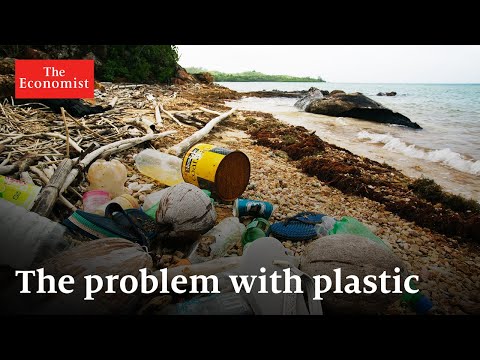
,1,Plastic pollution is destroying ocean life and coastal livelihoods. With small island states suffering most, what do they reveal about how to solve this global problem?
00:00 The plastic problem
00:43 What challenges do small islands face?
02:48 Where is the plastic coming from?
07:47 How are small islands combating plastic pollution?
11:13 How is plastic waste managed? / Where does plastic end up?
12:30 Future solutions
14:31 The global plastic treaty
Sign up to our weekly science newsletter to keep up to date: https://econ.st/3dMaWBt
The world’s waste problem is growing fast: https://econ.st/3LAZmXd
Watch our film on how chemical pollution is suffocating the sea: https://econ.st/3rLOW0f
Making trade greener: https://econ.st/46WQaVJ
Watch our film on ocean acidification: https://econ.st/46G1ZPG
,1,This incomplete 1950s color film documents an round-the-world trip on the refurbished ocean liner M.S. Willem Ruys (later known as the Achille Lauro). The film dates to sometime after 1958, when the Royal Rotterdamsche Lloyd and the Netherland Line signed a co-operative agreement to create a round-the-world passenger service. Their joint fleet would sail under the banner of "The Royal Dutch Mail Ships". It's possible this film dates to March 1959, when Willem Ruys went off on her new world service to Australia and New Zealand. She departed from Rotterdam, sailing via Southampton, the Mediterranean, the Suez Canal, Fremantle, Melbourne, Sydney, New Zealand, returning via the Panama Canal. The Royal Dutch Mail Ships (Willem Ruys, Johan van Oldenbarnevelt and Oranje) became a popular alternative to the British liners.
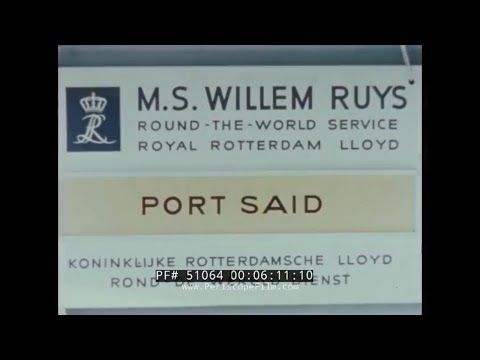
The film opens with the Captain looking through binoculars (:08). Passengers disembark from the Dutch passenger liner M.S. Willem Ruys of the Royal Rotterdam Lloyd docked at Rotterdam (:28-:48). Shown are a colorful “Voir La France” vintage postcard, “Motoring in Germany” booklet, and “Sightseeing Tours in Belgium” booklets (:51-:57). A grandmother dresses a doll and a grandfather constructs a wooden dollhouse. Both are packed into a crate and loaded on the ship (1:00-1:42). A crowd waits for some passengers to disembark and then waves goodbye to others as the ship is pulled out to sea by tugboats (2:00-2:50). A large net of cargo is lifted in the air (3:14). A white tour bus rounds a corner. It stops at an Abbey and restaurant (3:15-3:42). The cargo crane operator is seen through the crane’s window panes as cargo swings in the air amid ticker tape from those on deck and on the dock. Tugboats pull the ship away (3:43-4:12). A man enters the “Knatoor Adminstrateur Pursers Office” where crew officers are doing paperwork (4:14-4:32). Passengers view Portugal from the deck (4:42). Passengers relax on deck, some reading (5:03). A pianist and drummer play while passengers dance (5:36). A sign advertises “Port Said” on the round-the-world trip (6:12). A crew member uses a pirate handheld telescope to view an approaching small boat (6:16). The ship passes through the Suez Canal (6:48-6:54). In Cairo, a man rides a bicycle with a large plate of stacked bread balanced on his head (6:58). People cross a street wearing long robes and others wear suits and dresses (7:07). The pyramids rise in the distance (7:17). A tourist wearing a French beret and suit rides a camel (7:25). The wall of a pyramid is scanned (7:37). Locals wearing traditional desert long robes guide camels with tourists riding them past pyramids and ruins to the Sphinx of Gaza (7:44-8:20). Camels with colorful blankets kush. A closeup of a camel head shows the decorated reins. A local climbs on board the camel and it rises up with the Sphynx as the backdrop (8:23-8:54). The ship port sign says “Colombo”, which is in Sri Lanka (9:09). Men, women, and children sunbathers lounge on deck and play in the pool. Two women in bathing suits smoke cigarettes. Two men in speedos play volleyball. A game of shuffleboard and rope ring toss are shown (9:12-10:03).
MS Willem Ruys was a cruise ship based in Naples, Italy. She was built between 1939 and 1947 as a passenger liner for the Rotterdamsche Lloyd. In 1985, while serving under the name Achille Lauro, she was hijacked by members of the Palestine Liberation Front.
In other incidents, she also suffered two serious collisions (in 1953 with the MS Oranje and in 1975 with the cargo ship Youseff) and four onboard fires or explosions (in 1965, 1972, 1981, and 1994). In the last of these, in 1994, the ship caught fire and sank in the Indian Ocean off Somalia.
Motion picture films don't last forever; many have already been lost or destroyed. For almost two decades, we've worked to collect, scan and preserve the world as it was captured on 35mm, 16mm and 8mm movies -- including home movies, industrial films, and other non-fiction. If you have endangered films you'd like to have scanned, or wish to donate celluloid to Periscope Film so that we can share them with the world, we'd love to hear from you. Contact us via the weblink below.
This film is part of the Periscope Film LLC archive, one of the largest historic military, transportation, and aviation stock footage collections in the USA. Entirely film backed, this material is available for licensing in 24p HD, 2k and 4k. For more information visit http://www.PeriscopeFilm.com
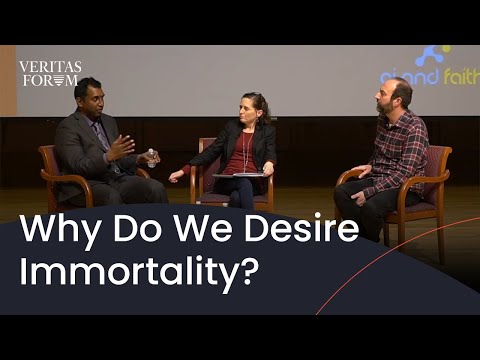
,1,John Lennox (Oxford) explores how Christianity defines purpose and meaning. | Brown University, 2013 | View full forum at https://www.youtube.com/watch?v=FdEuuQY8JEQ | Explore more at https://www.veritas.org.
Want Veritas updates in your inbox? Subscribe to our twice-monthly newsletter here:
https://www.veritas.org/newsletter-yt
INSTAGRAM: https://www.instagram.com/veritasforum
FACEBOOK: https://www.facebook.com/veritasforum
PODCAST: https://podcasts.apple.com/us/podcast/the-veritas-forum/id1210782509
SUBSCRIBE: https://www.youtube.com/subscription_center?add_user=VeritasForum
Over the past two decades, The Veritas Forum has been hosting vibrant discussions on life's hardest questions and engaging the world's leading colleges and universities with Christian perspectives and the relevance of Jesus. Learn more at http://www.veritas.org, with upcoming events and over 600 pieces of media on topics including science, philosophy, music, business, medicine, and more!
,1,Want to support this channel and help us preserve old films? Visit https://www.patreon.com/PeriscopeFilm
Visit our website www.PeriscopeFilm.com
This color educational film is about pesticides. The film was produced by Shell and made in 1971. It was directed by Richard Bigham and Richard Q. McNaughton, and was originally distributed by the Shell Corporation's Agricultural Division. The film shows the development of new pesticides and their benefits, and examines the process of developing data so that pesticides can be approved by the Environmental Protection Agency (EPA).
Opening titles: A Shell Film. Pesticides In Focus (:06-:36). Mountain view. Horses plow a field. People pick from muddy fields. Women pick grapes from grape vines. A woman plays with flour as he baby is on her back. Cities from all over the world - life is the city. Cars, people, tall buildings. Lots of people walking around. Plowing tractors go through wheat in a field (:37-2:43). Trees are knocked down in the forest. Animals flee as man creeps closer with their modern cities. People cut and pick crops in the fields. Corn has pests on it. Close on insects and larva as they threaten everything man grows. Field. People walk around near crops. Men spray crops and plants. Pesticides are sprayed by men onto the crops. A low flying small plane sprays crops. Damaged crop falls over. A man shakes an orange tree to collect the oranges. People cut the crops and cultivate them (2:44-5:25). Men spray pesticides in a village on sides of buildings. Men in all sorts of countries use pesticides and spray them. Aerial shot of a village town. A man sprays a lake with pesticides to get rid of gnats. Fish in the water, birds go after fish. A man on a boat. Food is served in a restaurant. A man brings a turkey to a table and starts to carve it. Animals in the wild. Insects attack a caterpillar. Coffee plantation. Ladybugs were used to kill the insects that were harming the coffee crop. Screw worms are bred in a factory, they live on flesh. Cows graze as do sheep. Screw worms like livestock. A man sterilizes screwworms and puts them in boxes, their eggs will never hatch. A plane flies high over crop. Cows rounded up (5:26-9:34). Bulls go in the water. Crops in the breeze. Lettuce crop, apple tree. A man sprays pesticides on leaves. A scientist works in a laboratory. A bunch of buildings where the scientists work. Chemists and scientists walk around and into a room a man starts looking at something. A scientist puts some insects into a jar with a plant. A man tests a pesticides spray. Bean leaves are being sprayed with a new type of pesticide (9:35-12:50). Jars hold leaves and the test pesticide. A mouse is given a test to see how a mammal reacts to it. Plants. Plants are sprayed on a conveyor belt. Soil is sprayed with a new pesticide to see how it reacts. Treated soil is given to earthworms to see how they react. Some pesticide is placed in water with fish. Bees are also experimented with. Birds eat from their feed. Those conducting the test do a test outside in the field by spraying crop. Some of the soil is picked up to be tested (12:51-16:11). Scientist does a check of the soil and a computer records his results. A toxicologist looks at the mammals that have been tested on. Another examines a rat to see how they have reacted to it. More rats and their offspring are looked at. Rat urine is looked at for damage to the kidneys (16:12-17:55). Rat blood is reviewed as well. Laboratory volunteers inhale pesticides. Tests are analyzed and recorded to see how those are reacting. Researchers review their data on computers. A helicopter sprays pesticides onto crops. A truck sprays the pesticides onto the crop as it drives through them. Computer prints paperwork. A man in the field observes. Some samples of soil are removed. Leaves are looked at in the field outside. A booklet called 'Petition for Tolerances' is printed out en masse. The booklets are placed into a larger bound volume and stored away. A government agency reviews the testing procedures and evidence at the trials. The men discuss around a table (17:56-21:15). A farmer uses a machine to gather his oranges. A man collects some oranges and bags them, taking them away for review. Men have medical examinations when they work at the plant. Computer data is reviewed. A doctor looks over an x-ray and then jots down his conclusions. Men plow the fields by hand. Corn is cooked and served. People eat food. A woman gathers food. Birds fly around near the water. Locusts swarm and a child runs through the swarm
(21:16-24:01). End credits (24:02-24:10).
This film is part of the Periscope Film LLC archive, one of the largest historic military, transportation, and aviation stock footage collections in the USA. Entirely film backed, this material is available for licensing in 24p HD, 2k and 4k. For more information visit http://www.PeriscopeFilm.com
,1,Joshua Swamidass (WashU) and Ryan Calo (UW) discuss the implications of artificial intelligence for law, life, and human identity. | University of Washington, 2020 | View full forum at https://www.youtube.com/watch?v=zRXWR_UQoBY | Explore more at https://www.veritas.org.
Want Veritas updates in your inbox? Subscribe to our twice-monthly newsletter here:
https://www.veritas.org/newsletter-yt
INSTAGRAM: https://www.instagram.com/veritasforum
FACEBOOK: https://www.facebook.com/veritasforum
PODCAST: https://podcasts.apple.com/us/podcast/the-veritas-forum/id1210782509
SUBSCRIBE: https://www.youtube.com/subscription_center?add_user=VeritasForum
Over the past two decades, The Veritas Forum has been hosting vibrant discussions on life's hardest questions and engaging the world's leading colleges and universities with Christian perspectives and the relevance of Jesus. Learn more at http://www.veritas.org, with upcoming events and over 600 pieces of media on topics including science, philosophy, music, business, medicine, and more!