📘Watch the full video here: https://youtu.be/1bgY29Umcxw
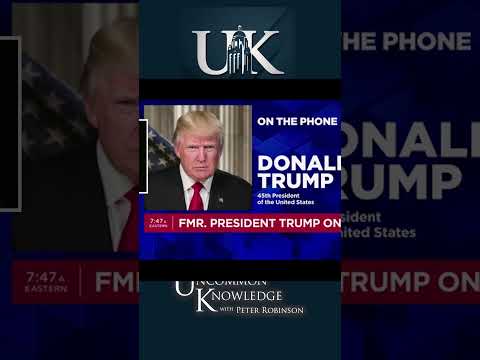
Donald Trump believes tariffs benefit the United States and stop wars. Is he correct in saying this?
Bjorn Lomborg is the president of the Copenhagen Consensus Center, a think tank dedicated to applying economic analysis, including cost-benefit analysis, to proposed policies around the issues of the day. He’s also a visiting professor at Copenhagen Business School and a visiting fellow at the Hoover Institution at Stanford University. Lomborg is the author of many books, including the 2001 bestseller The Skeptical Environmentalist.
In this interview, we discuss his latest book, Best Things First. Offering cost-benefit analyses of many of the top-line policies of industrial and developing nations, Dr. Lomborg discusses which policies we should prioritize and which we should pay less attention to or end. He also asserts the benefits of economic growth and argues that by investing in technology, we can solve major global problems, including hunger.
Don't forget to like, comment, and subscribe for more insights!
#BjornLomborg #EconomicAnalysis #PolicyDebate #CostBenefitAnalysis #BestThingsFirst #CopenhagenConsensus #TechnologySolutions #GlobalIssues #HungerSolutions #EconomicGrowth #TheSkepticalEnvironmentalist #donaldtrump #tariffs
,,fw4L6m6oVZs,UCzWwWbbKHg4aodl0S35R6XA, Business,Politics,Society, channel_UCzWwWbbKHg4aodl0S35R6XA, video_fw4L6m6oVZs,Hoover Institution senior fellow Elizabeth Economy and Rhodium Group Co-founder Daniel Rosen discuss the shift in Chinese economic policy under Xi Jinping, particularly his decision to move away from heavy investment in the property sector and focus on the "three new industries"—battery technology, electric vehicles (EVs), energy storage, and AI-driven advanced manufacturing.
#China #CCP #XiJinping #PRC #USA #America #UnitedStates #Trade #Economics #Tariffs #Politics #Geopolitics #Trump #DonaldTrump #EV #ElectricVehicle #Property #AI #ArtificialIntelligence ##Democracy #Battery #Technology #Taiwan #Philipines #HongKong #SouthChinaSea #Trade #TradeWar #Shorts #YouTubeShorts #ShortsVideo #ShortVideo
,,NuWFYdRqkJo,UCzWwWbbKHg4aodl0S35R6XA, Politics,Society, channel_UCzWwWbbKHg4aodl0S35R6XA, video_NuWFYdRqkJo,On #ChinaConsidered with host Elizabeth Economy, Matt Pottinger discusses how a second Trump administration might approach China policy. Pottinger explains that Trump may continue where he left off, largely utilizing the US-China trade relationship as a proxy for the problems in the broader relationship between the countries.
#China #CCP #XiJinping #PRC #USA #America #UnitedStates #Trade #Economics #Tariffs #Politics #Geopolitics #Trump #DonaldTrump #Democracy #Taiwan #Philipines #HongKong #SouthChinaSea #Trade #TradeWar #Shorts #YouTubeShorts #ShortsVideo #ShortVideo
,1,📘Watch the full video here: https://youtu.be/1bgY29Umcxw
Donald Trump believes tariffs benefit the United States and stop wars. Is he correct in saying this?
Bjorn Lomborg is the president of the Copenhagen Consensus Center, a think tank dedicated to applying economic analysis, including cost-benefit analysis, to proposed policies around the issues of the day. He’s also a visiting professor at Copenhagen Business School and a visiting fellow at the Hoover Institution at Stanford University. Lomborg is the author of many books, including the 2001 bestseller The Skeptical Environmentalist.
In this interview, we discuss his latest book, Best Things First. Offering cost-benefit analyses of many of the top-line policies of industrial and developing nations, Dr. Lomborg discusses which policies we should prioritize and which we should pay less attention to or end. He also asserts the benefits of economic growth and argues that by investing in technology, we can solve major global problems, including hunger.
Don't forget to like, comment, and subscribe for more insights!
#BjornLomborg #EconomicAnalysis #PolicyDebate #CostBenefitAnalysis #BestThingsFirst #CopenhagenConsensus #TechnologySolutions #GlobalIssues #HungerSolutions #EconomicGrowth #TheSkepticalEnvironmentalist #donaldtrump #tariffs