,Mike Tyson,Boxing,Hotboxing,Hotboxin,Hotboxin',Podcast,New Show,MMA,UFC,Combat Sports,Mike Tyson Interview,Mike Tyson Hotboxin,Mike Tyson Podcast,Sports Podcast,Iron Mike,Interview,hiphop,ice cube,superbowl,music,kendrick Lamar,kfouUQhbH98,UCZT_hV6nx0-N4ka5bWgh-qg, Entertainment,Hip_hop_music, channel_UCZT_hV6nx0-N4ka5bWgh-qg, video_kfouUQhbH98,This guy is the Teflon Don of rap giving middle fingers to the haters daily.
In this interview he speaks on the Kendrick Lamar Superbowl situation, his hatred for Ghostwriters, his hatred on black men in hip hop being feminized, and his hatred on the hate he gets from the NBA.
SUBSCRIBE: https://youtube.com/channel/UCZT_hV6nx0-N4ka5bWgh-qg?sub_confirmation=1
SHOP TYSON PRO: thttps://tysonpro.com
SHOP MIKE TYSON COLLECTION: https://miketyson.com
FOLLOW: https://Linktr.ee/hotboxinpodcast
INSTAGRAM: https://instagram.com/hotboxinpodcast
TIKTOK: https://tiktok.com/@hotboxin.miketyson
TWITTER: https://twitter.com/hotboxinpodcast
HOST INSTAGRAM : @djwhookid
,1,Join us for the final episode of Hotboxin'! In this exclusive and final interview, we sit down with renowned rapper, entrepreneur, and record executive Rick Ross. Delve into his career, from his early days as a rising star to becoming a multi-platinum artist and founder of Maybach Music Group. Discover the stories behind his chart-topping hits, collaborations with other music icons, and his journey to becoming a successful businessman. Gain unique insights into the world of hip-hop and more in this engaging conversation with the boss himself.
SUBSCRIBE: https://youtube.com/channel/UCZT_hV6nx0-N4ka5bWgh-qg?sub_confirmation=1
FOLLOW MIKE TYSON: https://instagram.com/MikeTyson
FOLLOW RICK ROSS: https://instagram.com/richforever
SHOP TYSON PRO: https://tysonpro.com
SHOP MIKE TYSON COLLECTION: https://miketyson.com
INSTAGRAM: https://instagram.com/hotboxinpodcast
TIKTOK: https://tiktok.com/@hotboxin.miketyson
TWITTER: https://twitter.com/hotboxinpodcast
LISTEN ON APPLE: https://podcasts.apple.com/us/podcast/hotboxin-with-mike-tyson/id1701464016
LISTEN ON SPOTIFY: https://open.spotify.com/show/7rrXnDyc70sfTcJqBO32lr
,1,Recorded on July 20, 1996.
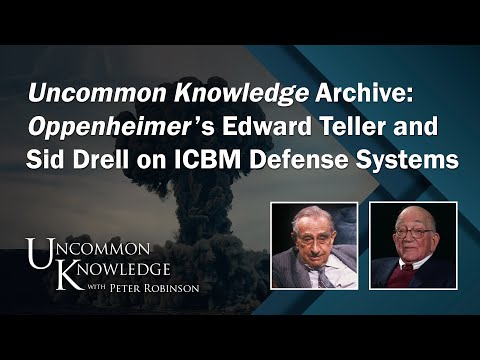
With the recent announcement that Oppenheimer, the film directed by Christopher Nolan, had garnered 11 Academy Award nominations, it seemed timely to pull from the archives this rarely seen episode of Uncommon Knowledge with Peter Robinson from 1996 (the third episode ever shot), featuring nuclear physicists and Hoover senior fellows Edward Teller and Sidney Drell. Teller was involved in the development of the first atomic bomb and is prominently featured in Oppenheimer. Drell was an expert in the field of nuclear arms control and cofounder of the Center for International Security and Arms Control, now the Center for International Security and Cooperation. He later was deputy director of the Stanford Linear Accelerator Laboratory (SLAC) from 1969 until his retirement from the lab in 1998. In this episode, Teller and Drell engage in a lively debate about the role of nuclear weapons and how they should be regulated in the late 20th century.
For further information:
https://www.hoover.org/publications/uncommon-knowledge
Interested in exclusive Uncommon Knowledge content? Check out Uncommon Knowledge on social media!
Facebook: https://www.facebook.com/UncKnowledge/
Twitter: https://www.twitter.com/UncKnowledge/
Instagram: https://instagram.com/uncommon_knowledge_show
MyHoover, a new way to stay up to date and follow your favorite Hoover content! Sign up here: https://hvr.co/3RnLBxp
,1,Explore and delve into fusion energy's complex scientific underpinnings.
Subscribe for regular science videos: http://bit.ly/RiSubscRibe
Watch the Q&A (exclusively for our YouTube channel members) here: https://www.youtube.com/watch?v=xSa8_32dO68&feature=youtu.be
This lecture was filmed on the 21 October 2023, in collaboration with the UK Atomic Energy Authority (UKAEA).
Join us for a captivating academic discourse on the need for fusion energy, where audiences are invited to explore and delve into fusion energy's complex scientific underpinnings.
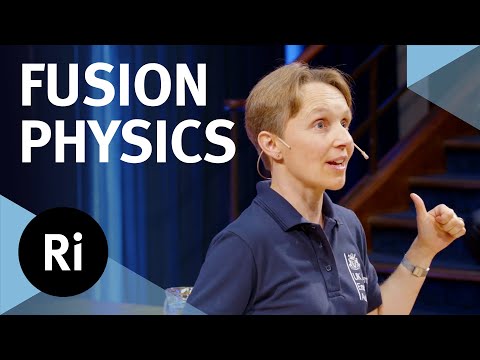
Mark Maslin, a preeminent researcher from UCL, talks about the interplay between fusion energy's development and its positioning in the broader energy market. Dennis Whyte, a respected scholar from MIT, delves into the formidable complexities of plasma physics, a crucial aspect of the fusion process. And Jenny Cane from UKAEA, an expert in fusion engineering, demonstrates the importance of integrated design and materials research in fusion energy development.
----
Jenny Cane is the Technical Lead for the STEP In-Vessel Components, responsible for the design and performance of the systems that lay closest to the plasma – the Blanket, First Wall, Divertor, Shielding, Limiters and Vacuum-Vessel. After graduating from a DPhil in the Aerodynamics and Heat Transfer of Ramjet Engines at Oxford University Jenny decided to move into renewable energy engineering and spent 7 years at the Wind Turbine manufacturer – Vestas, working as a control; project; and aerodynamics engineer both in the UK and the USA. Jenny began working as an thermo-hydraulics engineer at UKAEA in 2013 working on the JET safety case. She then moved into a lead engineer role for JET as it prepared for the record breaking deuterium-tritium campaigns; before moving to the STEP programme in 2019. She is a Fellow of the Institute of Mechanical Engineers, has two children and enjoys, running, cycling, tap dancing and gardening in her spare time.
Mark Maslin FRGS, FRSA is a Professor of Earth System Science at UCL and the Natural History Museum of Denmark. He is also Strategy Advisor to Lansons, Net Zero Now, a CSR Board member of Sopra Steria and a member of the Climate Crisis Advisory Group. He is a leading scientist with particular interest in understanding climate change and the major challenges facing humanity in the 21st century. He has published over 190 papers in journals such as Science, Nature, and The Lancet. He has received research, consultancy and training funding worth over £75m from government, charities, NGOs and the private sector. He was the only climatologist on the original 2009 The Lancet report on climate change and global health and is a co-author on the annual Lancet Countdown reports that started in 2015. Mark has written 10 books and 100 popular articles (e.g., New Scientist, Independent, Guardian, Telegraph, New York Times and The Conversation on which he currently has over 5.5 million reads). He regularly appears on radio and television, including BBC One David Attenborough’s ‘Climate Change: the facts’. His books include ‘Climate Change: A Very Short Introduction - 4th edition’ (2021), ‘The Cradle of Humanity’ (2019), ‘The Human Planet’ with Simon Lewis (2018) and his latest book is ‘How to Save Our Planet: the Facts’ (2021). Mark was recently named the Number 1 Global Sustainability thought leader and influencer of 2023.
Tim Bestwick is Chief Development Officer and Deputy CEO at the UK Atomic Energy Authority. Tim joined UKAEA in 2018 after leading commercialisation and innovation from big science programmes and campus development at Harwell and Daresbury. Following a career in corporate research in electronic devices and optoelectronics - including IBM and Sharp - Tim has been involved in establishing and growing multiple technology start-up companies. He was Chair of the Eureka Network, the major international business to business innovation network and is Chair of the Harwell Science and Innovation Campus. Tim was awarded an OBE in the King’s Birthday Honours List in 2023 for services to the commercialisation of science, technology, and innovation.
----
The Ri is on Twitter: http://twitter.com/ri_science
and Facebook: http://www.facebook.com/royalinstitution
and TikTok: https://www.tiktok.com/@ri_science
Listen to the Ri podcast: https://podcasters.spotify.com/pod/show/ri-science-podcast
Donate to the RI and help us bring you more lectures: https://www.rigb.org/support-us/donate-ri
Our editorial policy: https://www.rigb.org/editing-ri-talks-and-moderating-comments
Subscribe for the latest science videos: http://bit.ly/RiNewsletter
Product links on this page may be affiliate links which means it won't cost you any extra but we may earn a small commission if you decide to purchase through the link.
,1,Are generative AI models moving too fast for regulation to keep up? Will the development of generative AI outpace our ability to ensure their responsible use?
This is the second of three Turing Lectures, produced with The Alan Turing Institute. Watch the first one here: https://www.youtube.com/watch?v=_6R7Ym6Vy_I
Watch the Q&A: https://youtu.be/h4pxGVjbXVI
Subscribe for regular science videos: http://bit.ly/RiSubscRibe
This talk was recorded at the Ri on 17 October 2023, in collaboration with The Alan Turing Institute.
As generative AI becomes increasingly sophisticated, its potential to revolutionize the way we interact with data is clear. It has already shown its ability to assist with tasks such as image and video synthesis, text and speech generation, and music composition. However, the rapid development of generative AI models has also raised concerns about their misuse, particularly in the context of disinformation campaigns, deepfakes and online harassment.
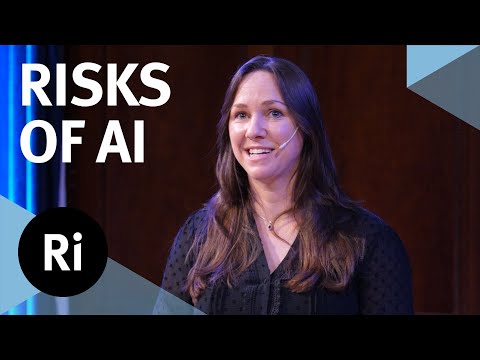
In this lecture, Mhairi Aitken examines what this means for online and offline safety and discuss how society might be able to mitigate these risks.
Mhairi Aitken is an Ethics Fellow in the Public Policy Programme at The Alan Turing Institute, and an Honorary Senior Fellow at Australian Centre for Health Engagement, Evidence and Values (ACHEEV) at the University of Wollongong in Australia. She is a Sociologist whose research examines social and ethical dimensions of digital innovation particularly relating to uses of data and AI. She was included in the 2023 international list of “100 Brilliant Women in AI Ethics”.
Thank you to our YouTube channel members who help us to be able to produce and share this content. Join them and get extra perks at https://www.youtube.com/channel/UCYeF244yNGuFefuFKqxIAXw/join
The Ri is on Twitter: http://twitter.com/ri_science
and Facebook: http://www.facebook.com/royalinstitution
and TikTok: https://www.tiktok.com/@ri_science
Listen to the Ri podcast: https://podcasters.spotify.com/pod/show/ri-science-podcast
Our editorial policy: https://www.rigb.org/editing-ri-talks-and-moderating-comments
Subscribe for the latest science videos: http://bit.ly/RiNewsletter
Product links on this page may be affiliate links which means it won't cost you any extra but we may earn a small commission if you decide to purchase through the link.
,1,January 10, 2024
Hoover Institution | Stanford University
Matteo Maggiori, Moghadam Family Professor of Finance at the Stanford Graduate School of Business, and senior fellow at the Stanford Institute for Economic Policy Research, discussed “A Framework for Geoeconomics,” a paper with Christopher Clayton (Yale School of Management), and Jesse Schreger (Columbia Business School).
PARTICIPANTS
Matteo Maggiori, John Taylor, Anat Admati, Annelise Anderson, Michael Boskin, Jeremy Bulow, John Cochrane, Randi Dewitty, Doug Diamond, David Fedor, Andy Filardo, Pete Fisher, Jared Franz, Eyck Freymann, Eric Hanushek, Heikki Hietala, Ashil Jhaveri, Kenn Judd, Evan Koenig, Roman Kräussl, Tom Kulisz, David Laidler, Mauricio Larraine, Dennis Lockhart, Robert McCauley, Axel Merk, Alexander Mihalov, Ilian Mihov, Casey Mulligan, David Neumark, Ned Prescott, Valerie Ramey, Ned Prescott, Joshua Rauh, Gary Roughead, Flavio Rovida, Paola Sapienza, Jesse Schreger, Lawrence Schembri, Tom Stephenson, Jack Tatom, Victor Valcarcel, Mark Wynne
ISSUES DISCUSSED
Matteo Maggiori, Moghadam Family Professor of Finance at the Stanford Graduate School of Business, and senior fellow at the Stanford Institute for Economic Policy Research, discussed “A Framework for Geoeconomics,” a paper with Christopher Clayton (Yale School of Management), and Jesse Schreger (Columbia Business School).
John Taylor, the Mary and Robert Raymond Professor of Economics at Stanford University and the George P. Shultz Senior Fellow in Economics at the Hoover Institution, was the moderator.
PAPER SUMMARY
Governments use their countries’ economic strength from existing financial and trade relationships to achieve geopolitical and economic goals. We refer to this practice as geoeconomics. We build a framework based on three core ingredients: limited contract enforceability, input-output linkages, and externalities. Geoeconomic power arises from the ability to jointly exercise threats across separate economic activities. A hegemon, like the United States, exerts its power on firms and governments in its economic network by asking these entities to take costly actions that manipulate the world equilibrium in the hegemon’s favor. We characterize the optimal actions and show that they take the form of mark-ups on goods or higher rates on lending, but also import restrictions and tariffs. Input-output amplification makes controlling some sectors more valuable for the hegemon since changes in the allocation of these strategic sectors have a larger influence on the world economy. This formalizes the idea of economic coercion as a combination of strategic pressure and costly actions. We apply the framework to two leading examples: national security externalities and the Belt and Road Initiative.
To read the paper click the following link
https://globalcapitalallocation.s3.us-east-2.amazonaws.com/CMS_Strategic.pdf
To read the slides, click the following link
https://www.hoover.org/sites/default/files/2024-01/CMS_Strategic_Slides.pdf