For subscriber-only exclusives, register for a free membership today: https://bit.ly/3He94Ns
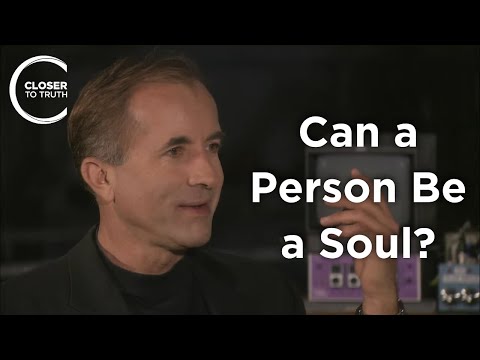
Is a soul required to make a person? If there is no soul, is there no person? Almost all scientists and most philosophers find no need for a soul. Certainly, souls are not known to science. What arguments support a soul? Revelations of religions? But then souls are a matter of faith. Any philosophical theories?
Purchase mugs, hoodies, and more in our Closer To Truth merch store: https://bit.ly/3P2ogje
Watch more interviews on the concept of souls: https://shorturl.at/rs368
Michael Brant Shermer is a science writer, historian of science, founder of The Skeptics Society, and Editor in Chief of its magazine Skeptic, which is largely devoted to investigating pseudoscientific and supernatural claims.
Free access to Closer to Truth's library of 5,000 videos: http://bit.ly/376lkKN
Closer To Truth, hosted by Robert Lawrence Kuhn and directed by Peter Getzels, presents the world’s greatest thinkers exploring humanity’s deepest questions. Discover fundamental issues of existence. Engage new and diverse ways of thinking. Appreciate intense debates. Share your own opinions. Seek your own answers.
,1,Get 20% off your Closer To Truth merch purchase with code THANKSCTT at checkout: https://bit.ly/3P2ogje
What makes one a person or a self? If he or she sees, hears, thinks and feels, is that a person or a self? How can separate perceptions bind together into a coherent mental unity of a single person or self? And how does personhood or self persist through time? If persons are all material, what enables the continuity? Is there a ‘carrier’ of personal identity?
Subscribe to the Closer To Truth podcast on Apple, Spotify, or wherever you listen: https://shorturl.at/mtJP4
Make a donation of any amount to help support Closer To Truth: https://shorturl.at/OnyRq
Closer To Truth, hosted by Robert Lawrence Kuhn and directed by Peter Getzels, presents the world’s greatest thinkers exploring humanity’s deepest questions. Discover fundamental issues of existence. Engage new and diverse ways of thinking. Appreciate intense debates. Share your own opinions. Seek your own answers.
,1,Subscribe to the Closer To Truth podcast on Apple, Spotify, or wherever you listen: https://shorturl.at/mtJP4
Why do people believe the things they do? We like to think that we are rational, that what we believe is true. But often we come to our beliefs, unknowingly, as a product of our particular ‘belief systems’. How do belief systems work their credulous magic? What principles enable belief systems to influence individuals and commandeer groups?
Follow Closer To Truth on Instagram for news, event discounts, and exciting updates: https://www.instagram.com/closertotruth/
Elizabeth F. Loftus is an American psychologist who is best known in relation to the misinformation effect, false memory and criticism of recovered memory therapies.
Support Closer To Truth with a tax-deductible donation of any amount: https://shorturl.at/OnyRq
Closer To Truth, hosted by Robert Lawrence Kuhn and directed by Peter Getzels, presents the world’s greatest thinkers exploring humanity’s deepest questions. Discover fundamental issues of existence. Engage new and diverse ways of thinking. Appreciate intense debates. Share your own opinions. Seek your own answers.
,1,Make a tax-deductible donation to support Closer To Truth's mission of exploring the world's deepest questions around the globe: https://shorturl.at/OnyRq
Is our search for God too narrow? Why do some philosophers espouse ‘pantheism’? Pantheism’s claim is not shy: God is the Cosmos and the Cosmos is God. But does re-naming all-that-exists ‘God’ add understanding? Can the new name make the world ‘sacred’? What is gained, and what is lost, if a theist becomes a pantheist?
Get special exclusives and discounts with a free Closer To Truth membership today: https://closertotruth.com/.
Peter Forrest teaches the areas of Epistemology and Metaphysics at the University of New England. He works in the area of the philosophy of physics, epistemology, the philosophy of religion, and other issues in metaphysics and epistemology.
Closer To Truth, hosted by Robert Lawrence Kuhn and directed by Peter Getzels, presents the world’s greatest thinkers exploring humanity’s deepest questions. Discover fundamental issues of existence. Engage new and diverse ways of thinking. Appreciate intense debates. Share your own opinions. Seek your own answers.
,1,Get 20% off your Closer To Truth merch purchase with code THANKSCTT at checkout: https://bit.ly/3P2ogje
Arguments about God, whether based on science, philosophy, theology or personal experience are always fascinating. Those arguments should push and be pushed in order to consider the possible existence of a Creator. We must also consider defeaters of God. For all arguments for and against God, we should explore their assumptions, logic and boundaries.
Subscribe to the Closer To Truth podcast on Apple, Spotify, or wherever you listen: https://shorturl.at/mtJP4
Anthony Clifford Grayling CBE FRSA FRSL is a British philosopher and author. He was born in Northern Rhodesia and spent most of his childhood there and in Nyasaland. In 2011 he founded and became the first Master of New College of the Humanities, an independent undergraduate college in London.
Make a donation of any amount to help support Closer To Truth: https://shorturl.at/OnyRq
Closer To Truth, hosted by Robert Lawrence Kuhn and directed by Peter Getzels, presents the world’s greatest thinkers exploring humanity’s deepest questions. Discover fundamental issues of existence. Engage new and diverse ways of thinking. Appreciate intense debates. Share your own opinions. Seek your own answers.
,1,Find us on X for news and articles, plus connect with other viewers: https://shorturl.at/imHY9
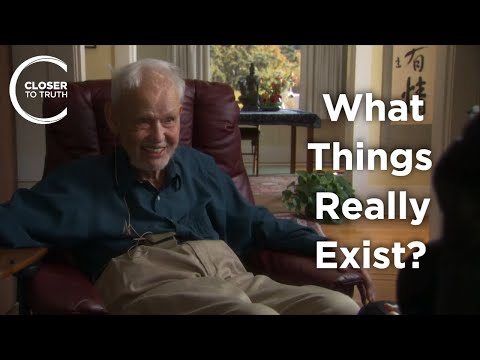
When you ask what things really exist, and you think deeply about this probe to apprehend what is out there, you see the whole world anew. What are the most general categories to understand the world? It’s such a simple question; how can it inspire such profound insights?
Watch more interviews on the metaphysics of the cosmos: https://shorturl.at/ehoPP
Support the show with Closer To Truth merchandise like hoodies, notebooks, and mugs: https://bit.ly/3P2ogje
Huston Cummings Smith was a religious studies scholar and former Professor of Philosophy and Religion at Syracuse University.
Register for a free CTT membership today to get exclusive benefits: https://closertotruth.com/
Make a tax-deductible donation to Closer To Truth to help keep our content free and without paywalls: https://shorturl.at/OnyRq
Closer To Truth, hosted by Robert Lawrence Kuhn and directed by Peter Getzels, presents the world’s greatest thinkers exploring humanity’s deepest questions. Discover fundamental issues of existence. Engage new and diverse ways of thinking. Appreciate intense debates. Share your own opinions. Seek your own answers.
,1,This week's top stories of the week include:
0:14 Wind turbine repurposed into home – It’s built from the control box of a Vattenfall turbine which stood in an Austrian wind farm for 20 years. Most wind farm nacelles today are much larger. But a team from architecture collective Superuse Studios, working with Blade-Made, chose one of the smallest to prove that the concept of a tiny turbine home could work.
1:57 Robot makes its conducting debut – The 3-armed robot performed in a concert in Germany, leading the specially written Semiconductor’s Masterpiece. The piece features 3 wildly diverging time signatures. The orchestra’s artistic director says the robot is not intended to replace humans but to perform complex music too difficult for a person to conduct.
3:41 Europe’s largest Marine Protected Area – It covers almost 300,000 km2 of the ocean floor and encompasses several vulnerable marine ecosystems. Half the new MPA is fully protected, meaning no fishing or extractive activities are allowed. While the other half is highly protected which restricts activities like fishing.
6:41 4 ways to maximize cybersecurity – Cyber insecurity is one of the biggest risks facing the world. As technology evolves and spreads, cyber resilience becomes more important than ever. Cyber resilience is an organization’s ability to minimize the impact of significant cyber incidents on its primary goals and objectives.
_____________________________________________
The World Economic Forum is the International Organization for Public-Private Cooperation. The Forum engages the foremost political, business, cultural and other leaders of society to shape global, regional and industry agendas. We believe that progress happens by bringing together people from all walks of life who have the drive and the influence to make positive change.
World Economic Forum Website ► http://www.weforum.org/
Facebook ► https://www.facebook.com/worldeconomicforum/
YouTube ► https://www.youtube.com/wef
Instagram ► https://www.instagram.com/worldeconomicforum/
Twitter ► https://twitter.com/wef
LinkedIn ► https://www.linkedin.com/company/world-economic-forum
TikTok ► https://www.tiktok.com/@worldeconomicforum
Flipboard ► https://flipboard.com/@WEF
#WorldEconomicForum
,1,For subscriber-only exclusives, register for a free membership today: https://bit.ly/3He94Ns
Is a soul required to make a person? If there is no soul, is there no person? Almost all scientists and most philosophers find no need for a soul. Certainly, souls are not known to science. What arguments support a soul? Revelations of religions? But then souls are a matter of faith. Any philosophical theories?
Purchase mugs, hoodies, and more in our Closer To Truth merch store: https://bit.ly/3P2ogje
Watch more interviews on the concept of souls: https://shorturl.at/rs368
Michael Brant Shermer is a science writer, historian of science, founder of The Skeptics Society, and Editor in Chief of its magazine Skeptic, which is largely devoted to investigating pseudoscientific and supernatural claims.
Free access to Closer to Truth's library of 5,000 videos: http://bit.ly/376lkKN
Closer To Truth, hosted by Robert Lawrence Kuhn and directed by Peter Getzels, presents the world’s greatest thinkers exploring humanity’s deepest questions. Discover fundamental issues of existence. Engage new and diverse ways of thinking. Appreciate intense debates. Share your own opinions. Seek your own answers.
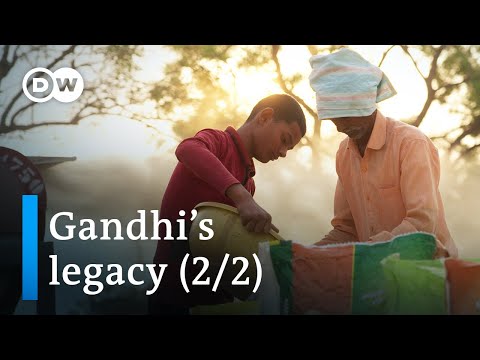
,1,India, the world’s largest democracy, turns 75. With his special brand of non-violent resistance, Mahatma Gandhi paved the way for the country’s independence. He campaigned for a pluralistic, secular state and equal opportunities for all. What remains of those ambitions, today?
How far as India distanced itself from the ideals of equality and non-violence espoused by Mahatma Gandhi and other founding fathers? How are democracy, human rights and social justice faring today - and where is India headed?
These are the questions that form the basis for this film’s narrative. The film focuses on people still working today to keep Gandhi’s ideals alive - a challenge, as contemporary reality is often a world away from those goals. Taken together, their stories form a mosaic representing the multi-faceted nation that is India.
A nation marked by stark poverty and great wealth. On the one hand blighted by Hindu nationalism, violence against women and overwhelmed by major environmental problems. On the other, India fosters great geopolitical goals and has an ambitious space program. Although discrimation on the basis of caste is banned by the constitution, the country continues to marginalize certain sections of its population; children continue to be exploited in urban brickyards; and indigenous populations are driven from their land to make way for corporate development. At the same time, India is a highly spiritual place with a rich cultural history; a nation that comes up with innovative, critical and creative responses to all manner of problems. Both films in this two-part documentary explore the intersections of these colliding worlds - brought to life through personal stories.
Contemporary accounts of India frequently look to the past, when the foundations were laid for the world’s largest democracy. One person in particular who was able to build a bridge between the past and the present is Arun Gandhi, grandson of Mahatma Gandhi, who was murdered in 1948. Arun lived with his grandfather for many years and relates personal anecdotes from that time. He captured his grandfather’s ideas in a well-respected book ("The Gift of Anger: And Other Lessons from My Grandfather Mahatma Gandhi”) and draws comparisons between India’s recent history and its current predicament.
The Indian academic and globalization critic Vandana Shiva sees a vast chasm between Gandhi’s ideals and the modern reality. Her stance is unequivocal: civil disobedience is necessary to this day.
Part 1: https://youtu.be/fO-bgE1pkyQ
#documentary #dwdocumentary #Gandhi #India #IndianIndependence
______
DW Documentary gives you knowledge beyond the headlines. Watch top documentaries from German broadcasters and international production companies. Meet intriguing people, travel to distant lands, get a look behind the complexities of daily life and build a deeper understanding of current affairs and global events. Subscribe and explore the world around you with DW Documentary.
Subscribe to:
⮞ DW Documentary (English): https://www.youtube.com/dwdocumentary
⮞ DW Documental (Spanish): https://www.youtube.com/dwdocumental
⮞ DW Documentary وثائقية دي دبليو (Arabic): https://www.youtube.com/dwdocarabia
⮞ DW Doku (German): https://www.youtube.com/dwdoku
⮞ DW Documentary हिन्दी (Hindi): https://www.youtube.com/dwdochindi
For more visit: http://www.dw.com/en/tv/docfilm/s-3610
Follow DW Documentary on Instagram: https://www.instagram.com/dwdocumentary/
Follow DW Documental on Facebook: https://www.facebook.com/dwdocumental
We kindly ask viewers to read and stick to the DW netiquette policy on our channel: https://p.dw.com/p/MF1G