Gabor Maté CM (born January 6, 1944) is a Hungarian-born Canadian physician. He has a background in family practice and a special interest in childhood development and trauma, and in their potential lifelong impacts on physical and mental health, including on autoimmune disease, cancer, ADHD, addictions, and a wide range of other conditions.
Now retired from clinical practice, he travels and speaks extensively on these and related topics, both in North America and abroad. His books have been published internationally in over twenty-five languages. Maté's approach to addiction focuses on the trauma his patients have suffered and looks to address this in their recovery, with special regard to indigenous populations around the world.
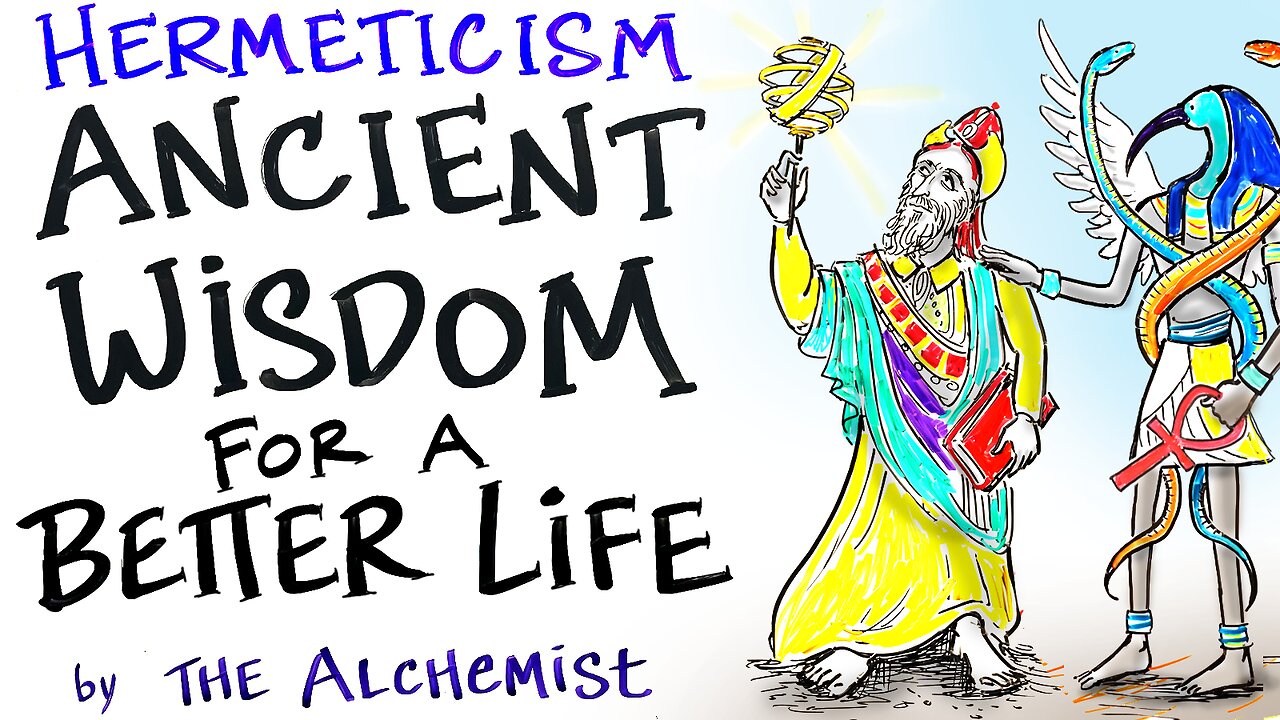
The seven principles are the foundation of Hermeticism, a branch of spiritual philosophy dating back over 5000 years ago. They were outlined by famed author Hermes Trismegistus, who is believed to have written the Emerald Tablet and the Corpus Hermeticum (two highly influential, ancient teachings).
His work would go on to influence both ancient Greek and Egyptian cultures, with both adopting him as a god of wisdom. (In Greece he was called Hermes; in Egypt, Thoth.) He was known in his time as a great master of the universe and is said to have lived for thousands of years.
Over time, the seven hermetic principles were passed down by word-of-mouth from teacher to student, and eventually, one day in the early 20th century, the teachings were compiled into a book called The Kybalion, written by "The Three Initiates." Today, they remain an occult source of wisdom, separate from any real religion but powerful nonetheless.
And while the seven principles are just one way of understanding the universe, they aren't so constricting that they cannot be studied alongside other spiritual philosophies.
Huge thank you to Sarah Elkhaldy (The Alchemist) for this wonderful collaboration. Please subscribe to The Alchemist Youtube channel for more spiritual knowledge.
Thomas Sowell (born June 30, 1930) is an American author, economist, and political commentator who is a senior fellow at the Hoover Institution at Stanford University. Sowell is the author of more than 45 books (including revised and new editions) on a variety of subjects including politics, economics, education and race, and he has been a syndicated columnist in more than 150 newspapers.
Sowell was born in segregated Gastonia, North Carolina, to a poor family, and grew up in Harlem, New York City. Due to poverty and difficulties at home, he dropped out of Stuyvesant High School and worked various odd jobs, eventually serving in the United States Marine Corps during the Korean War. Afterward he took night classes at Howard University and then attended Harvard University, where he graduated magna cum laude in 1958. He earned a master's degree in economics from Columbia University the next year and a doctorate in economics from the University of Chicago in 1968. In his academic career, he has served on the faculties of Cornell University, Amherst College, Brandeis University, the University of California, Los Angeles, and, currently, Stanford University. He has also worked at think tanks including the Urban Institute. Since 1977, he has worked at the Hoover Institution at Stanford University, where he is the Rose and Milton Friedman Senior Fellow on Public Policy.
Please consider supporting After Skool on Patreon https://www.patreon.com/AfterSkool Visit our site at https://www.afterskool.net/ Check out the new After Skool prints! after-skool.creator-spring.com Or send us an email at afterskool100@gmail.com
Please share, like, comment, subscribe and hit the notifications bell so you don't miss future videos. Thank you.
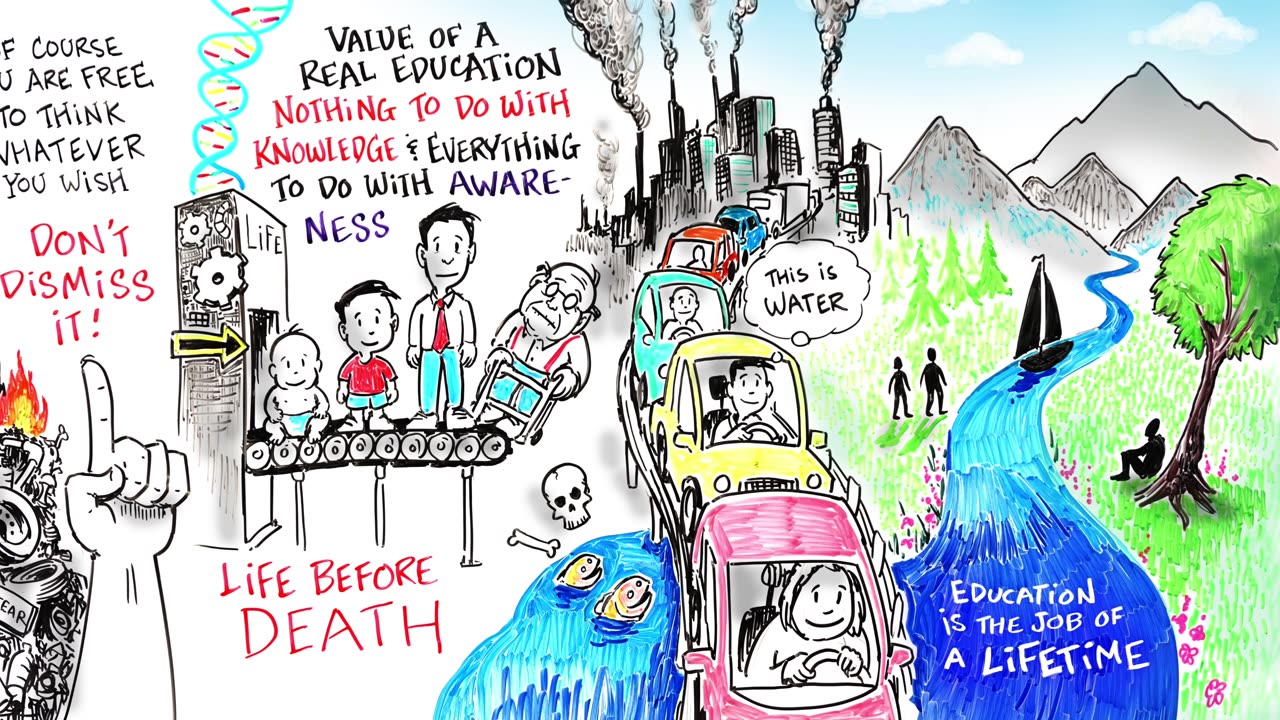
David Foster Wallace (February 21, 1962 – September 12, 2008) was an American writer and university professor in the disciplines of English and creative writing. This speech is from his graduation address at Kenyon College in 2005.
The most profound ideas are the most difficult to articulate because they express thoughts that transcend words. Many of us struggle through life because we are stuck in our "default setting", where we unconsciously see ourselves as the absolute center of the universe. David Foster Wallace presents an alternative way to see the world in this timeless speech.
This animation took over a month to create. If you like this video and want to see more, please consider supporting After Skool on Patreon https://www.patreon.com/AfterSkool
,1,Carl Jung, in full Carl Gustav Jung, (born July 26, 1875, Kesswil, Switzerland—died June 6, 1961, Küsnacht), Swiss psychologist and psychiatrist who founded analytic psychology, in some aspects a response to Sigmund Freud’s psychoanalysis. Jung proposed and developed the concepts of the extraverted and the introverted personality, archetypes, and the collective unconscious. His work has been influential in psychiatry and in the study of religion, literature, and related fields.
In this video, we explore Carl Jung's search for the soul - which entails making the unconscious conscious, confronting the dark night of the soul, shadow work, integrating the anima and animus, and achieving wholeness.
This script was written and recorded by Eternalised. Please check out their youtube channel for more insightful videos. https://www.youtube.com/c/Eternalised
Please consider supporting After Skool on Patreon https://www.patreon.com/AfterSkool
Visit our site at https://www.afterskool.net/
Check out the new After Skool prints! after-skool.creator-spring.com
Or send us an email at afterskool100@gmail.com
Please share, like, comment, subscribe and hit the notifications bell so you don't miss future videos. Thank you.
Music by CO.AG Music and Alexander Nakarada
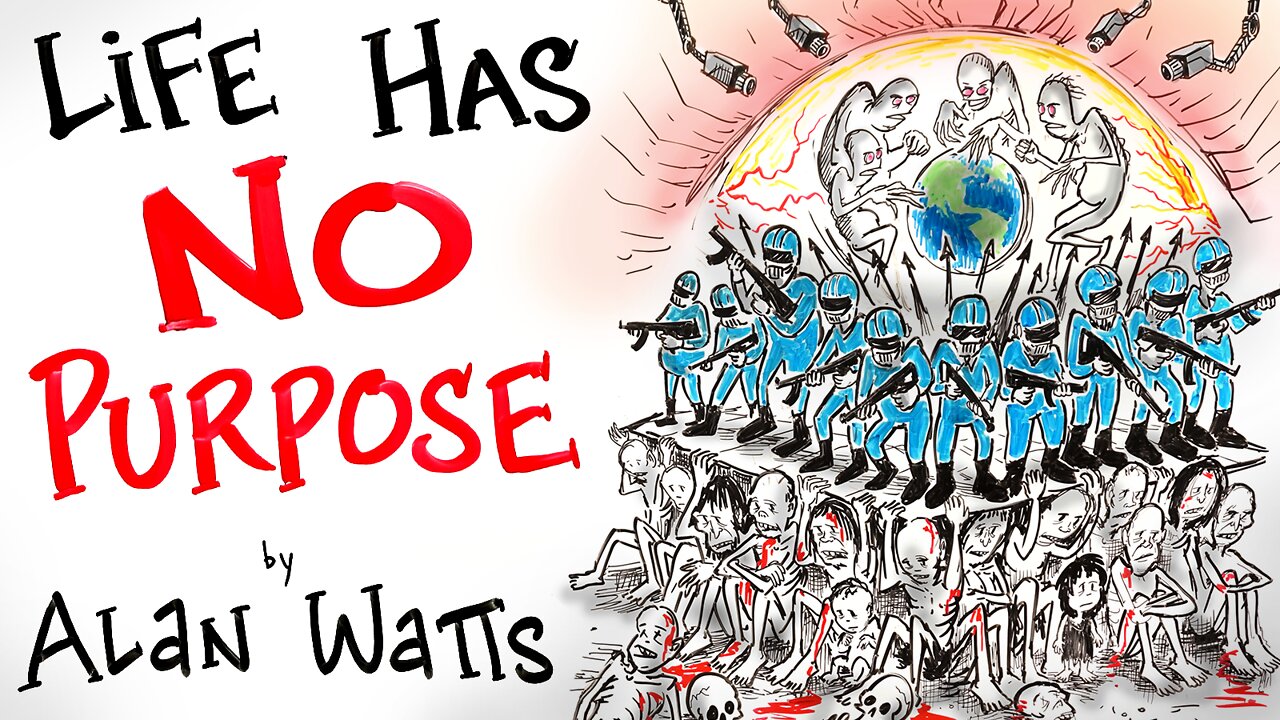
http://www.audible.com/afterskool or text afterskool to 500 500 to get your free trial. Alan Wilson Watts (6 January 1915 – 16 November 1973) was a well-known British philosopher, writer and speaker, best known for his interpretation of Eastern philosophy for Western audiences. He left behind more than 25 books and an audio library of nearly 400 talks, which are still in great demand.
This audio is from "Man and Nature" Part 2 by Alan Watts
No, and that good news needs to be front and center in all discussions of gun control, especially after school shootings.
https://reason.com/video/2023/04/05/do-more-guns-lead-to-more-deaths/ _____ Just days after the school shooting in Nashville that left three students and three adults dead, Rep. Jamaal Bowman (D–N.Y.) and Rep. Thomas Massie (R–Ky.) got into a fiery exchange captured on video by Emily Brooks, a reporter for The Hill.
"There has never been a school shooting in a school that allows teachers to carry," said Massie. "More guns lead to more deaths," countered Bowman, "more guns lead to more deaths!"
It's understandable that tempers flare and voices rise in the aftermath of such horrific events. When faced with such situations, the urge to do something—to do anything—is nearly impossible to resist.
But is Rep. Bowman right that "more guns lead to more deaths?"
The short answer is no. That's great news, especially since reducing the number of guns in circulation presents not just immense pragmatic challenges but almost certainly insuperable constitutional barriers.
Over the past few decades, the number of guns in America has increased massively, so much so that there are now more guns than people in the United States. Yet federal crime statistics show that firearm homicides dropped about 40 percent between 1993 and 2018, from 7 per 100,000 people to 4.3 per 100,000 people (for nonfatal crimes involving guns, the decline was 71 percent). Violent crime, including homicides, did spike during the pandemic, and while the most recent data is incomplete, it's clear that gun-related violence remains far below where it was 30 years ago despite more guns than ever being out there.
When it comes to schools, the 2020–21 academic year, the latest for which full data is available, did see the highest number of school shootings with casualties this century. There are thankfully too few violent deaths to generate statistically significant conclusions, but the long-term trends show no increase in homicides or suicides among students, staff, and teachers.
Overall, schools are becoming safer and safer, with the government finding that between 2009 and 2020, "the rate of nonfatal criminal victimization (including theft and violent victimization) decreased for students ages 12–18, from 51 to 11 victimizations per 1,000 students."
What about Rep. Massie's contention that there has never been a school shooting in a school that allows teachers to carry? He appears to be correct, though contrary to his claim that there's never been an accidental weapons discharge by a teacher, a January 2023 RAND Corporation study found that educators and school resource officers have been involved in accidental discharges of weapons. On the larger question of arming teachers, RAND found that there is simply no good data on whether doing so would increase gun violence or reduce it across eight categories, including mass shootings and suicides.
What, then, can be done?
Most schools are already gun-free zones or have strict controls on who is allowed to carry while on campus; many have armed officers on campus despite no evidence that such a presence deters violence.
Recent school shootings—like the one last year in Uvalde, Texas, where law enforcement officials not only did nothing to prevent an active shooter but restrained parents trying to rescue their children—underscore that police need better and more effective training. The 2018 school shooting in Marjory Stoneman Douglas High School in Florida drove home how many red flags school staff, law enforcement, and social workers had ignored.
To simply say that the people in charge of school safety need to do better is deeply unsatisfying, but it might be the best option, especially if the rush to "do something" means trying something that we already know is impossible, ineffective, or both.
Produced by Nick Gillespie and Justin Zuckerman; Sound editing by Ian Keyser
Photos: Camden Hall/Newscom; Mickey Bernal/ZUMA Press/Newscom; Mickey Bernal/ZUMAPRESS/Newscom; ERIC PAUL ZAMORA/MCT/Newscom; Sun Sentinel/TNS/Sipa USA/Newscom; Giorgio Viera/EFE/Newscom; KatRam / MEGA / Newscom/KRMET/Newscom
Music: "Lullaby No 3 in E Minor" by Ran Raiten via Artlist; "Autumn Pizzicato" by Veaceslav Draganov via Artlist; "Premiere" by ANBR via Artlist
,1,Wilfred Wong is an international human rights activist who has been investigating Satanic ritual abuse for 27 years. SRA is a brutal form of physical and psychological abuse on children, youth & vulnerable adults.
Follow the podcast on:
iTunes - https://apple.co/32Z5hQt
Spotify - https://spoti.fi/331WFJ4
Google Play - https://bit.ly/3hItzSZ
Soundcloud - https://bit.ly/32VxAPU
DANNY
https://www.instagram.com/jonesdanny
https://twitter.com/jonesdanny
MUSIC BY REST
https://youtu.be/3o_HHv8TAAc
KONCRETE STORE: http://store.koncrete.com
KONCRETE SOCIALS
http://twitter.com/koncrete
http://instagram.com/koncrete
http://facebook.com/koncreteinc
Gabor Maté CM (born January 6, 1944) is a Hungarian-born Canadian physician. He has a background in family practice and a special interest in childhood development and trauma, and in their potential lifelong impacts on physical and mental health, including on autoimmune disease, cancer, ADHD, addictions, and a wide range of other conditions.
Now retired from clinical practice, he travels and speaks extensively on these and related topics, both in North America and abroad. His books have been published internationally in over twenty-five languages. Maté's approach to addiction focuses on the trauma his patients have suffered and looks to address this in their recovery, with special regard to indigenous populations around the world.