The Eyewitness to History video library was created to enable audiences everywhere to hear firsthand testimony from Holocaust survivors. This video was created from a live digital program, First Person: Conversations with Holocaust Survivors, recorded on November 16, 2022. It features Holocaust survivor Arye Ephrath, who was born in the Nazi German client state of Slovakia in 1942. His family avoided deportation for a number of years before going into hiding in Šišov, an isolated village in western Slovakia, in 1944. Arye spent the rest of the war hiding with a local shepherd and his family and pretending to be a girl to avoid suspicion, while his parents were hidden by a different family in a hole beneath a barn floor.
Learn more about Arye: https://www.ushmm.org/remember/holocaust-survivors/volunteers/arye-ephrath
,1,In 1942, Ania Drimer was born in the Soviet forced labor camp (gulag) where her parents were deported following the invasion of Poland. Her mother, Ernestine, closely looked after Ania in the gulag and collected food necessary for the family's survival.
On special occasions like today—Thanksgiving—Ania honors her mother by baking her signature walnut torte, which Ernestine taught Ania to bake after they were allowed to leave the gulag and rebuild their lives.
,1,What do a bunny, a ring, and a violin have in common? They’re symbols of kindness from the Holocaust, proof that even in the hardest of times, people still found ways to lift each other up.
#WorldKindnessDay #History #Holocaust
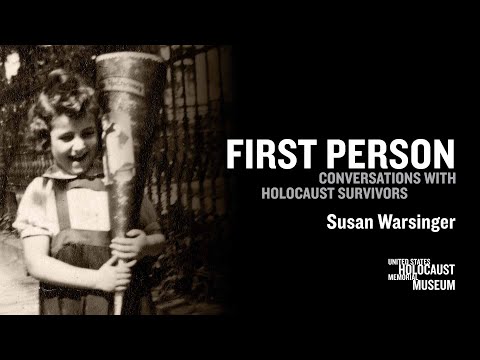
,1,A brick smashing through the bedroom window jolted nine-year-old Susan Warsinger awake on Kristallnacht (or “Night of Broken Glass”) in Nazi Germany on November 9, 1938. Watch to learn how Susan and her brother Joseph managed to outrun danger as war erupted in Europe.
The next First Person conversation with a Holocaust survivor will be available to watch on Wednesday, July 31, 2024.
First Person is a monthly, hour-long interview between journalist Bill Benson and a Holocaust survivor on the Museum’s YouTube page, including questions from the audience. This program is made possible through generous support from the Louis Franklin Smith Foundation.
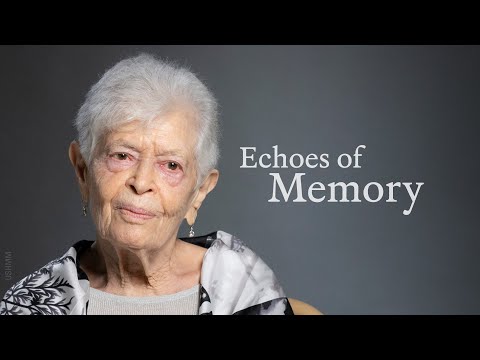
,1,Ruth Cohen, a volunteer at the United States Holocaust Memorial Museum, reads an essay she wrote about her immigration to America. It was recorded in September 2022.
The essay was written in a guided writing workshop for survivors of the Holocaust called Echoes of Memory.
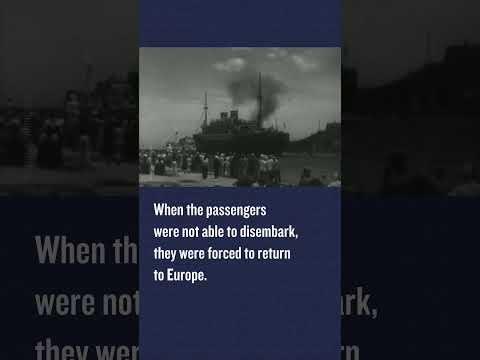
,1,Eighty-five years ago, Freya Maier set sail on the MS St. Louis with more than 900 Jewish refugees fleeing Nazi Germany.
What they thought would be their passage to freedom took a dark turn when they were forced to return to Europe. By the end of the Holocaust, 254 refugees had been killed.
Learn the fate of Freya and her dress that symbolized the hope she had for a new life.
,1,The Eyewitness to History video library was created to enable audiences everywhere to hear firsthand testimony from Holocaust survivors. This video was created from a live digital program, First Person: Conversations with Holocaust Survivors, recorded on November 16, 2022. It features Holocaust survivor Arye Ephrath, who was born in the Nazi German client state of Slovakia in 1942. His family avoided deportation for a number of years before going into hiding in Šišov, an isolated village in western Slovakia, in 1944. Arye spent the rest of the war hiding with a local shepherd and his family and pretending to be a girl to avoid suspicion, while his parents were hidden by a different family in a hole beneath a barn floor.
Learn more about Arye: https://www.ushmm.org/remember/holocaust-survivors/volunteers/arye-ephrath