Gideon Frieder, a volunteer at the United States Holocaust Memorial Museum, reads an essay about the Catholic couple who sheltered him in Slovakia when he was a boy, and the revelation he made about them as an adult.
The essay was written in a guided writing workshop for survivors of the Holocaust called Echoes of Memory.
,1,In 1942, Ania Drimer was born in the Soviet forced labor camp (gulag) where her parents were deported following the invasion of Poland. Her mother, Ernestine, closely looked after Ania in the gulag and collected food necessary for the family's survival.
On special occasions like today—Thanksgiving—Ania honors her mother by baking her signature walnut torte, which Ernestine taught Ania to bake after they were allowed to leave the gulag and rebuild their lives.
,1,What do a bunny, a ring, and a violin have in common? They’re symbols of kindness from the Holocaust, proof that even in the hardest of times, people still found ways to lift each other up.
#WorldKindnessDay #History #Holocaust
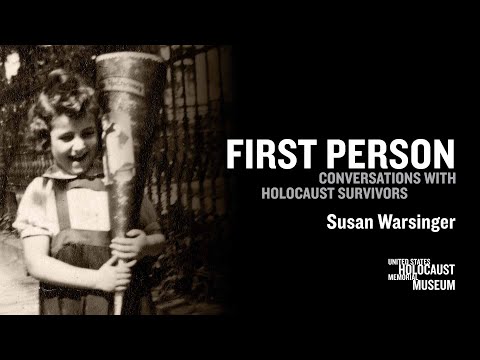
,1,A brick smashing through the bedroom window jolted nine-year-old Susan Warsinger awake on Kristallnacht (or “Night of Broken Glass”) in Nazi Germany on November 9, 1938. Watch to learn how Susan and her brother Joseph managed to outrun danger as war erupted in Europe.
The next First Person conversation with a Holocaust survivor will be available to watch on Wednesday, July 31, 2024.
First Person is a monthly, hour-long interview between journalist Bill Benson and a Holocaust survivor on the Museum’s YouTube page, including questions from the audience. This program is made possible through generous support from the Louis Franklin Smith Foundation.
,1,Ruth Cohen, a volunteer at the United States Holocaust Memorial Museum, reads an essay she wrote about her immigration to America. It was recorded in September 2022.
The essay was written in a guided writing workshop for survivors of the Holocaust called Echoes of Memory.
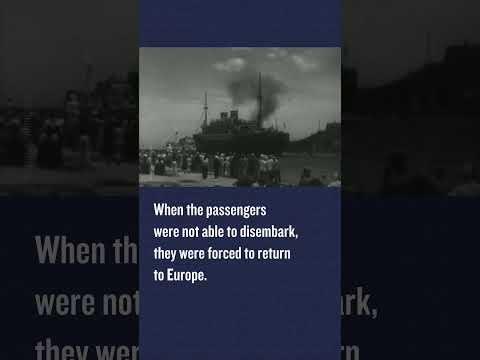
,1,Eighty-five years ago, Freya Maier set sail on the MS St. Louis with more than 900 Jewish refugees fleeing Nazi Germany.
What they thought would be their passage to freedom took a dark turn when they were forced to return to Europe. By the end of the Holocaust, 254 refugees had been killed.
Learn the fate of Freya and her dress that symbolized the hope she had for a new life.
,1,Comanche code talker Charles Chibitty was one of many Native Americans who used their languages to communicate secret messages that stumped the Germans and helped the Allies win World War II. Lumbee tribal citizen Jesse Oxendine was part of the 82nd Airborne division that encountered Nazi atrocities when they liberated the Wöbbelin concentration camp and forced local Germans to bury the dead and attend the victims’ funeral services. Watch our commemoration of Indigenous Peoples' Day and learn about courageous Native Americans who confronted Holocaust atrocities while serving their country.
Guest
Alexandra Harris, Co-curator of the exhibit and Co-author of the book "Why We Serve: Native Americans in the United States Armed Forces," Smithsonian National Museum of the American Indian
Host
Dr. Edna Friedberg, Historian, United States Holocaust Memorial Museum
Watch Jesse Oxendine’s testimony describing his service in WWII and the Holocaust atrocities he witnessed when he and the 82nd Airborne Division liberated the Wöbbelin concentration camp: https://collections.ushmm.org/search/catalog/irn607953
Learn how the 45th Infantry Division—including 2,000 Native American soldiers and nicknamed “Thunderbird” during WWII—liberated the Dachau concentration camp: https://encyclopedia.ushmm.org/content/en/article/the-45th-infantry-division
To see other episodes in the Museum's Stay Connected Live series, go to https://www.youtube.com/playlist?list=PLWQC3P4psZP6Mh45xyYa2QepIMgkKD4BA
For more personal stories, behind-the-scenes insights, and expert historians, subscribe to the Museum's YouTube channel at https://www.youtube.com/@holocaustmuseum
,1,Lilly Malnik’s young granddaughter, Miriam, couldn’t help but ask about the tattoo on her arm. The series of numbers was inked on Lilly’s body at Auschwitz when she was 15. Over the years, Lilly shared more and more of her painful Holocaust experiences with her granddaughter. Now, together they answer questions from a new generation, reaching millions on social media with Lilly’s story.
Join us as we commemorate Grandparents Day on September 13 at 2 p.m. ET live on Youtube with Lilly and Miriam Ezagui.
Guests
Lilly Appelbaum Malnik, Holocaust survivor and grandmother
Miriam Ezagui, Lilly Malnik's granddaughter and social media influencer
Host
Dr. Edna Friedberg, Historian, United States Holocaust Memorial Museum
,1,This video discusses the origins of transitional justice in the aftermath of the Holocaust and the Second World War and discusses four key forms of transitional justice – truth seeking, prosecution, reparations, and prevention. Experts Yasmine Chubin and Ambassador Stephen Rapp as well as Rohingya activist Yasmin Ullah discuss the goals and challenges of transitional justice efforts, as well as the role of criminal justice professionals in the aftermath of mass atrocities.
,1,René and Renate Guttmann were about six years old when they became subjects in the notorious twins experiments run by SS Dr. Josef Mengele at #Auschwitz. Hear Renate describe the first time they met the Nazi doctor and her overwhelming desire to protect her brother.
,1,Gideon Frieder, a volunteer at the United States Holocaust Memorial Museum, reads an essay about the Catholic couple who sheltered him in Slovakia when he was a boy, and the revelation he made about them as an adult.
The essay was written in a guided writing workshop for survivors of the Holocaust called Echoes of Memory.
,1,In this video, Wai Wai Nu describes her family’s interactions with the criminal justice system in Burma leading up to the genocide of the Rohingya in 2017.
,1,Holocaust survivor and Museum volunteer, Ruth Cohen, reflects on her family and why we must learn from the past to take action against antisemitism today.
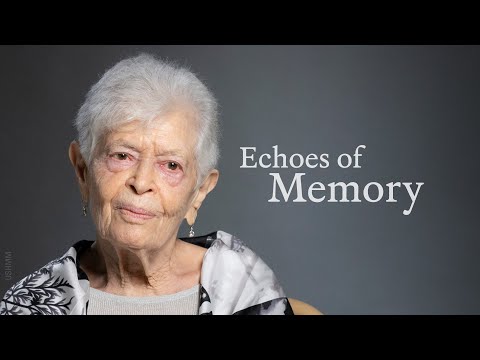
,1,Echoes of Memory provides survivors who volunteer at the Museum with a powerful outlet to share their experiences and memories—through their own writing. The Museum conducts guided writing workshops to strengthen the writers’ abilities to recount their experiences for the historical record. In these videos, survivors who have taken part in the workshop read their own essays.
This is one more way that the Museum helps survivors—eyewitnesses to the Holocaust—to help new generations gain insight and understanding of Holocaust history from a deeply personal perspective.
This program, originally inspired by the Leave-A-Legacy Writing Workshops developed by the Drew University Center for Holocaust/Genocide Study, has been facilitated since 2001 by Dr. Margaret Peterson. The writer’s workshop model she has employed prioritizes the voice and authority of each writer and allows the participants to support each other in telling his or her own story of survival.