December 8, 2023
Hoover Institution | Stanford University
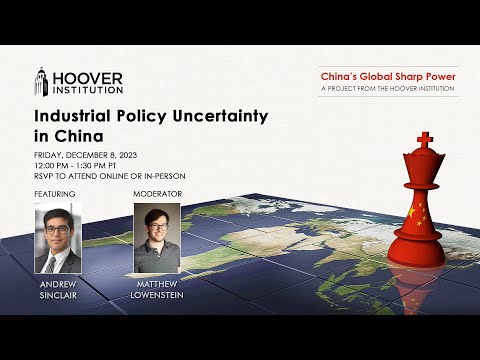
The Hoover Project on China’s Global Sharp Power held an event titled: Industrial Policy Uncertainty in China on Friday, December 8, 2023 at 12:00 pm PT.
Will China maintain its comparative advantage in industrial policy? State-led investment boosts competitiveness today, but the long-run sustainability of this model depends crucially on policy efficiency. In this talk, Andrew Sinclair presented his work using a comprehensive dataset of all industrial policy announcements by China's State Council from 2008 to 2022 to find that policy uncertainty introduces a shadow financial cost that substantially reduces the efficiency of Chinese industrial policy. Industrial policies increase firm value, but investors heavily discount the value of future support because of the risk that policies may abruptly and arbitrarily change.
FEATURING
Andrew Sinclair is a Visiting Assistant Professor of Finance at Caltec, on leave from The University of Hong Kong. He is a financial economist studying modern China's financial system. He graduated with a PhD in finance from Yale University in 2017 and joined HKU the same year.
DISCUSSANT
Matthew Lowenstein is a Hoover Fellow at the Hoover Institution. He is an economic historian of late imperial and Republican-era China. Prior to entering academia, he worked as a securities analyst covering China equities at JCaptial Research.
,,fw4L6m6oVZs,UCzWwWbbKHg4aodl0S35R6XA, Business,Politics,Society, channel_UCzWwWbbKHg4aodl0S35R6XA, video_fw4L6m6oVZs,Hoover Institution senior fellow Elizabeth Economy and Rhodium Group Co-founder Daniel Rosen discuss the shift in Chinese economic policy under Xi Jinping, particularly his decision to move away from heavy investment in the property sector and focus on the "three new industries"—battery technology, electric vehicles (EVs), energy storage, and AI-driven advanced manufacturing.
#China #CCP #XiJinping #PRC #USA #America #UnitedStates #Trade #Economics #Tariffs #Politics #Geopolitics #Trump #DonaldTrump #EV #ElectricVehicle #Property #AI #ArtificialIntelligence ##Democracy #Battery #Technology #Taiwan #Philipines #HongKong #SouthChinaSea #Trade #TradeWar #Shorts #YouTubeShorts #ShortsVideo #ShortVideo
,,NuWFYdRqkJo,UCzWwWbbKHg4aodl0S35R6XA, Politics,Society, channel_UCzWwWbbKHg4aodl0S35R6XA, video_NuWFYdRqkJo,On #ChinaConsidered with host Elizabeth Economy, Matt Pottinger discusses how a second Trump administration might approach China policy. Pottinger explains that Trump may continue where he left off, largely utilizing the US-China trade relationship as a proxy for the problems in the broader relationship between the countries.
#China #CCP #XiJinping #PRC #USA #America #UnitedStates #Trade #Economics #Tariffs #Politics #Geopolitics #Trump #DonaldTrump #Democracy #Taiwan #Philipines #HongKong #SouthChinaSea #Trade #TradeWar #Shorts #YouTubeShorts #ShortsVideo #ShortVideo
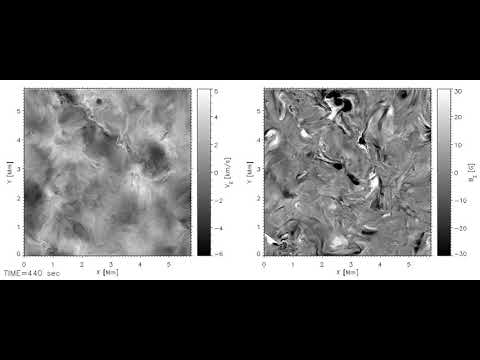
,1,This video shows a section from a 3D simulation with a dynamo magnetic field at a resolution of 5 kilometres. The section is taken near the base of the chromosphere, where the flow is dominated by shock waves. The part on the left shows the vertical velocity of the plasma; the video on the right shows the magnetic field. In both representations, bright regions indicate flows towards the viewer; black regions are flows towards the Sun’s interior. In this side-by-side view, the connection between the magnetic field and the plasma becomes apparent, for instance when looking at the vortexes forming near the upper edge of the section. Such vortexes are, in fact, facilitating heat transfer from the magnetic field to the plasma, as the simulation results showed. Video credit: E. Khomenko
,1,December 8, 2023
Hoover Institution | Stanford University
The Hoover Project on China’s Global Sharp Power held an event titled: Industrial Policy Uncertainty in China on Friday, December 8, 2023 at 12:00 pm PT.
Will China maintain its comparative advantage in industrial policy? State-led investment boosts competitiveness today, but the long-run sustainability of this model depends crucially on policy efficiency. In this talk, Andrew Sinclair presented his work using a comprehensive dataset of all industrial policy announcements by China's State Council from 2008 to 2022 to find that policy uncertainty introduces a shadow financial cost that substantially reduces the efficiency of Chinese industrial policy. Industrial policies increase firm value, but investors heavily discount the value of future support because of the risk that policies may abruptly and arbitrarily change.
FEATURING
Andrew Sinclair is a Visiting Assistant Professor of Finance at Caltec, on leave from The University of Hong Kong. He is a financial economist studying modern China's financial system. He graduated with a PhD in finance from Yale University in 2017 and joined HKU the same year.
DISCUSSANT
Matthew Lowenstein is a Hoover Fellow at the Hoover Institution. He is an economic historian of late imperial and Republican-era China. Prior to entering academia, he worked as a securities analyst covering China equities at JCaptial Research.
,1,One reason why Drake keeps Orgonite generators throughout his mansions is going to leave you absolutely speechless. These orgonite or orgone generators are renowned for producing life force energy. Drake, often linked with the mystique of the Illuminati, frequently discusses the importance of surrounding himself with "good energy" in his stories.
Beyond their energy-producing qualities, these devices also counteract the adverse effects of MF radiation. Observations show that when in proximity to an orgonite generator, the EMF reader's measurement drops to zero, confirming studies that electromagnetic frequencies can harm our DNA and cells. In another instance, an orgone generator brought an EMF reading from 300 straight down to zero. The potent energy these devices emit is further demonstrated through a frozen water test. Animals, particularly cats and dogs, seem instinctively drawn to orgone generators, often resting beside them. Additionally, these generators can amplify plant growth by threefold, prolong food freshness, and even promote deeper sleep with insanely vivid dreams.
References:
- Brown, D., & Smirnov, I. (2018). Bioelectromagnetic Healing: A Rationale for its Use. Freedom Press.
- Davis, D. L., & Kesari, S. (2018). Environmental and Health Risks of Electromagnetic Fields. Academic Press.
- Greer, J. (2016). The Druidry Handbook: Spiritual Practice Rooted in the Living Earth. Weiser Books.
- Ristau, K. A. (2017). Resonance: A Framework for Philanthropic Transformation. Chicago Review Press.
- Sharaf, M. (1994). Fury on Earth: A Biography of Wilhelm Reich. Da Capo Press.
- DeMeo, J. (2010). The Orgone Accumulator Handbook: Wilhelm Reich's Life-Energy Discoveries and Healing Tools for the 21st Century. Natural Energy Works.
0:00 Drake's Use of Orgonite Generators
4:06 The Science and Ancient Knowledge Behind Orgonites
6:46 The Obscured Truth About Orgone Energy
9:49 The Dark Side of Orgonites
________________________________________________________________________
Speech by Video Advice
Footage provided by Storyblocks and Artgrid
Music provided by Epidemic Sound and Artlist
References used under Fair Use Law
________________________________________________________________________
📩 For any concerns or business inquiries, please get in touch with us at videoadvice@yahoo.ro
AFFILIATE DISCLOSURE: there may be a few links in this description that, at no cost to you, will earn us a commission if you click them and purchase.
Don’t worry; we only recommend products we know and trust.
________________________________________________________________________
,1,Israel declares attack a state of "war" as Hamas fires thousands of rockets.
SUBSCRIBE to ABC News on YouTube: https://bit.ly/2vZb6yP
Latest updates: http://abcnews.go.com/
Watch FULL EPISODES on Hulu: http://abcn.ws/3bzvQQn
#gma #israel #gazastrip
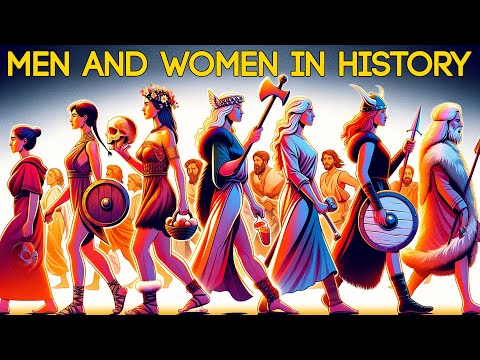
,1,Hunting men, gathering women — that is the picture of prehistory as many of us know it. In this documentary, we delve into the realm of gender history, challenging the traditional narrative that has long shaped our understanding of past societies.
Researchers and historians, featured in this documentary, dispute the long-held belief of the male hunter as the primary provider, suggesting a more nuanced perspective of gender roles since the beginning of human history. Early archaeologists, often influenced by the gender norms of their own times in the 19th and early 20th centuries, overlooked evidence that contradicted this simplistic gender dynamic. Utilizing modern forensic science techniques, new discoveries are reshaping our understanding of gender roles, unearthing stories of Stone Age artists, affluent Bronze Age princesses, and axe-wielding female Vikings. These revelations are pivotal in redefining our cultural and gendered past, as this documentary unveils.
#documentary #gender #history #ancienthistory
----
Further videos on hazards and catastrophes :
┕ Rembrandt - The master of light and shadow | Documentary
▸https://www.youtube.com/watch?v=D1cw_DPVD0c
----
Interesting links and sources:
https://www.history.ox.ac.uk/growth-gender-and-womens-history
https://www.uni-kiel.de/en/unizeit/uz/news/gender-stereotypes-from-the-stone-age
https://www.openaccessgovernment.org/challenging-prehistoric-gender-roles-women-as-hunters-too/168733/
----
This channel offers you full episodes of high quality documentaries. Enjoy and don't forget to subscribe :)
----
Other channels you might be interested in:
criminals and crimefighters: https://www.youtube.com/channel/UCYuXyzwA_w4-c1FJrqOnR0A
space and science: https://www.youtube.com/channel/UC1-7mA0mKsCTyCMG4JNO3EQ
,1,With just days until the Iowa caucuses, the crew reacts to a head-to-head debate between former U.N. Ambassador Nikki Haley and Florida Gov. Ron DeSantis, as well as a town hall featuring former President Donald Trump.
Website: http://fivethirtyeight.com/
Merch: http://fivethirtyeight.com/store
Twitter: http://twitter.com/fivethirtyeight/
Facebook: https://www.facebook.com/fivethirtyeight/
Podcast: https://itunes.apple.com/us/podcast/fivethirtyeight-politics/id1077418457?mt=2
,1,This week's top stories of the week include:
0:15 World's first malaria vaccination programme – Cameroon is offering the vaccine free of charge to every child aged 6 months or under. Thousands of lives could be saved as a result. In 2022, malaria killed 580,000 people in Africa. That’s 95% of all deaths from malaria that year.
2:06 Panama canal drought halting shipping – Traffic has been limited to 24 ships per day. 14 fewer than under normal conditions. The canal is in the grip of the worst drought in its 143-year history. It has already had a significant impact on global trade. The Panama Canal is one of the world’s most important trade routes.
3:59 Why character can determine our success – Most people see cognitive skills such as maths or literacy as key to growth, he says. When Adam Grant believes it’s qualities such as determination that matter most.
6:58 How the bioeconomy can save the Amazon – In a bioeconomy, food, materials and energy are produced using renewable resources. Fany Kuiru Castro is the first woman to lead the Coordinating Body of Indigenous Organisations of the Amazon Basin (COICA). An organization that represents 511 Indigenous peoples in the 9 Amazonian countries.
_____________________________________________
The World Economic Forum is the International Organization for Public-Private Cooperation. The Forum engages the foremost political, business, cultural and other leaders of society to shape global, regional and industry agendas. We believe that progress happens by bringing together people from all walks of life who have the drive and the influence to make positive change.
World Economic Forum Website ► http://www.weforum.org/
Facebook ► https://www.facebook.com/worldeconomicforum/
YouTube ► https://www.youtube.com/wef
Instagram ► https://www.instagram.com/worldeconomicforum/
Twitter ► https://twitter.com/wef
LinkedIn ► https://www.linkedin.com/company/world-economic-forum
TikTok ► https://www.tiktok.com/@worldeconomicforum
Flipboard ► https://flipboard.com/@WEF
#Davos #wef24 #WorldEconomicForum