Neil deGrasse Tyson responds to comments made by Terrence Howard, reveals parts of his treatise, and explores the nature of scientific discovery.
Check out our second channel, @StarTalkPlus
Get the NEW StarTalk book, 'To Infinity and Beyond: A Journey of Cosmic Discovery' on Amazon: https://amzn.to/3PL0NFn
Support us on Patreon: https://www.patreon.com/startalkradio
FOLLOW or SUBSCRIBE to StarTalk:
Twitter: http://twitter.com/startalkradio
Facebook: https://www.facebook.com/StarTalk
Instagram: https://www.instagram.com/startalk
About StarTalk:
Science meets pop culture on StarTalk! Astrophysicist & Hayden Planetarium director Neil deGrasse Tyson, his comic co-hosts, guest celebrities & scientists discuss astronomy, physics, and everything else about life in the universe. Keep Looking Up!
#StarTalk #neildegrassetyson
Timestamps:
00:00 - What Happened & The Dunning-Kruger Effect
4:56 - Breaking it Down
14:58 - Handling New Ideas
,startalk,star talk,startalk radio,neil degrasse tyson,neil tyson,science,space,astrophysics,astronomy,podcast,space podcast,science podcast,astronomy podcast,niel degrasse tyson,physics,supersymmetry,shadow particles,squark,sneutrino,quantum entanglement,quantum entanglement explained,laws of physics,1L6hinhDXQE,, Society, channel_UCqoAEDirJPjEUFcF2FklnBA, video_1L6hinhDXQE,How do particles get mass? Neil deGrasse Tyson and comedian Chuck Nice discover squarks, sneutrinos, the Higgs boson, and whether dark matter has a particle with theoretical physicist Brian Greene.
Go to https://ground.news/startalk to stay fully informed on Space and Science news. Save 40% off through my link for unlimited access to the Vantage plan this month.
Can we finally get to the bottom of what happens when a quark falls into a black hole? Learn about the ultraviolet catastrophe, the start of quantum physics, and Max Planck quantizing packets of energy. We also discuss how Einstein won the Nobel prize for the discovery for which he is least famous.
We take a deep dive into the Higgs boson. Who’s Higgs? What’s a boson? Find out about how the Higgs field creates mass, the different quantum particles, and how quarks create protons and neutrons. Brian breaks down the theory of supersymmetry: does every particle have a counterpart? Learn about squarks, sneutrinos, and whether supersymmetry can give an answer to what dark matter is.
Is the fabric of spacetime woven by tiny wormholes? Discover the Casimir force, quantum fluctuations, and why you need so many dimensions in a string theory universe. We discuss whether the cosmological constant is, in fact, constant. Plus, find out about the biggest mismatch between theory and experiment in physics.
Timestamps:
00:00 - Introduction: Brian Greene
07:45 - When a Quark Falls Into a Black Hole
13:55 - The Beginning of Quantum Physics & Einstein’s Nobel Prize
18:01 - Discovering the Higgs Boson
21:52 - What is the Higgs Boson?
26:26 - How Do Particles in an Atom Get Mass?
30:30 - Is Dark Matter a Particle?
33:20 - Squarks, Sneutrinos, & Supersymmetry
40:16 - Fabric of Spacetime Woven by Wormholes
45:06 - Four Dimensions & String Theory
47:20 - Is Dark Matter Just Matter in Another Universe?
49:30 - Is the Cosmological Constant Constant?
56:16 - A Cosmic Perspective
Check out our second channel, @StarTalkPlus
Get the NEW StarTalk book, 'To Infinity and Beyond: A Journey of Cosmic Discovery' on Amazon: https://amzn.to/3PL0NFn
Support us on Patreon: https://www.patreon.com/startalkradio
FOLLOW or SUBSCRIBE to StarTalk:
Twitter: http://twitter.com/startalkradio
Facebook: https://www.facebook.com/StarTalk
Instagram: https://www.instagram.com/startalk
About StarTalk:
Science meets pop culture on StarTalk! Astrophysicist & Hayden Planetarium director Neil deGrasse Tyson, his comic co-hosts, guest celebrities & scientists discuss astronomy, physics, and everything else about life in the universe. Keep Looking Up!
#StarTalk #NeildeGrasseTyson
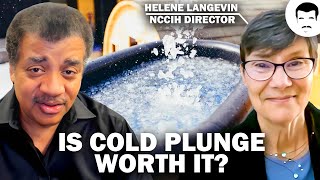
,startalk,star talk,startalk radio,neil degrasse tyson,neil tyson,science,space,astrophysics,astronomy,podcast,space podcast,science podcast,astronomy podcast,niel degrasse tyson,physics,medical research,vitamins,Vitamin D,Vitamin E,meal replacement,cold plunge,cold therapy,FDA,supplements,acupuncture,placebo effect,physiology,stretching,yoga,overstretching,autonomic nervous system,resilience,sitting,remodeling,inflammation,WA8Fvs6NBBQ,, Health,Society, channel_UCqoAEDirJPjEUFcF2FklnBA, video_WA8Fvs6NBBQ,What does science say about alternative medicines and health fads? Neil deGrasse Tyson and co-hosts Chuck Nice and Gary O’Reilly learn about the science behind what alternative medicine can and cannot do with director of National Center for Complementary and Integrative Health, Helene Langevin, M.D.
Do any alternative medicines have scientific backing? Are we completely at the mercy of influencers for health advice? What is “complementary medicine”? Learn about how many vitamins you should be taking and whether you need them at all. How do you keep up with changing health research? We discuss supplements and meal replacement. Can food really be replaced?
We break down acupuncture and what it does and doesn’t do. Why would someone in pain want to get stabbed by needles? How does the placebo effect work? Does it work? We explore cold therapies like cold plunge and the effect of physiological stress.
Is sitting down the new smoking? We talk about the role of stretching and what it does for your connective tissue. Can you stretch too much? What happens if you don’t move? We discuss inflammation and its role in healing. How can our healthcare system help improve overall health? Plus, is natural always good and artificial always bad?
Thanks to our Patrons Patrick, Tylré Livingstone, Claire Sims, Terrel Kimber, tinybird, Shawn Hugo, Chris Trent, Deborah Lagutaris, Steve Doom!, and Brian Lopez for supporting us this week.
NOTE: StarTalk+ Patrons can listen to this entire episode commercial-free
Check out our second channel, @StarTalkPlus
Get the NEW StarTalk book, 'To Infinity and Beyond: A Journey of Cosmic Discovery' on Amazon: https://amzn.to/3PL0NFn
Support us on Patreon: https://www.patreon.com/startalkradio
FOLLOW or SUBSCRIBE to StarTalk:
Twitter: http://twitter.com/startalkradio
Facebook: https://www.facebook.com/StarTalk
Instagram: https://www.instagram.com/startalk
About StarTalk:
Science meets pop culture on StarTalk! Astrophysicist & Hayden Planetarium director Neil deGrasse Tyson, his comic co-hosts, guest celebrities & scientists discuss astronomy, physics, and everything else about life in the universe. Keep Looking Up!
#StarTalk #neildegrassetyson
00:00 - Introduction: Complementary Medicine
04:29 - NIH Investigating Alternative Medicine
7:40 - Do We Need to Take More Vitamins?
12:20 - Why Does Health Advice Change So Much?
17:50 - Verifying Substances & Meal Replacements
20:58 - Science on Acupuncture & The Placebo Effect
28:10 - Cold Therapy & Science of Resilience
33:35 - Is Sitting the New Smoking?
37:58 - Can You Over-Stretch?
42:10 - Inflammation: Good or Bad?
44:55 - Is “Natural” Always Good?
,Neil deGrasse Tyson,Neil,deGrasse,Tyson,Niel deGrasse Tyson,Niel,Space,Physics,StarTalk,StarTalk Plus,StarTalk+,Universe,Astrophysics,Cosmos,Smart Guy,Aliens,Stars,Planets,Pluto,Nebula,Nebulae,Big Bang,Milky Way,R9L3RvL223k,, Knowledge, channel_UCQzvIHX3SVrSc9P5_GdRWfQ, video_R9L3RvL223k,Are atomic models just tiny Solar Systems? Is it just Solar Systems all the way down? Neil deGrasse Tyson gets to the heart of those questions as he offers an informed rebuttal.
Why don't some of our smaller planets have moons? Neil delves deeply into the laws that govern planetary physics. Learn about the struggle for Gravitational Influence. How many moons does Jupiter have? The answer may surprise you.
Of course, Neil doesn't miss an opportunity to remind everyone why Pluto isn't a planet either. He explains eloquently why Pluto doesn't make it into the club, while also tackling other planetary questions; Why are planets round? Why do we have seasons? Why does the tide come in and out? All this, and more, will be answered by your personal astrophysicist.
From an episode of 'Cosmic Queries — Everyday Astrophysics': https://youtu.be/mzQJ8mJxNwg
Get the NEW StarTalk book, 'To Infinity and Beyond: A Journey of Cosmic Discovery' on Amazon: https://amzn.to/3PL0NFn
Support us on Patreon: https://www.patreon.com/startalkradio
FOLLOW or SUBSCRIBE to StarTalk:
Twitter: http://twitter.com/startalkradio
Facebook: https://www.facebook.com/StarTalk
Instagram: https://www.instagram.com/startalk
Timestamps:
0:00 - Solar Systems All the Way Down?
0:52 - Why Don't Smaller Planets Have Moons?
1:38 - Why Pluto Isn't a Planet
3:13 - The Moon is Spiraling Away from Earth
3:41 - Why We Have Tides
4:33 - Falling into Jupiter
5:28 - Why We Have Seasons
6:45 - Life on Exoplanets
7:29 - The Big Bang Theory
,astroben,spacepodcast,astrophysics,astronomy,spacescience,nasa,cosmos,spacenews,planetaryscience,rocketscience,spacetalk,universe,spacetechnology,startalk,podcast,youtubepodcast,sciencepodcast,pCj4Wmx70AI,, Knowledge, channel_UCRB9opru-NC9RVUCFsMqUZQ, video_pCj4Wmx70AI,(Episode first aired 25th November 2022 - audio only)
@DrBrianKeating
Dr Brian Keating is a Chancellor’s Distinguished Professor of physics at the Center for Astrophysics & Space Sciences (CASS) in the Department of Physics at the @UofCaliforniaOP University of California, San Diego. He is a public speaker, inventor, and an expert in the study of the universe’s oldest light, the cosmic microwave background (CMB), using it to learn about the origin and evolution of the universe. Keating is a writer and podcaster and the best-selling author of one of Amazon Editors’ ‘Best Non-fiction Books of All Time”, Losing the @NobelPrize
In this episode, Ben and Brian discuss “losing the Nobel prize”, how young scientists need to be wary of confirmation bias, the importance of science communication and why we should all look up at the stars!
Please support this podcast by checking out our sponsor:
Spaced Ventures: https://www.spacedventures.com/ to invest into shares of actual space startups!
Subjects Discussed:
Losing the Nobel Prize
What is the James Webb Space Telescope telling us?
Potential of Nancy Grace Roman Space Telescope
“Into The Impossible” Podcast - subscribe on Apple
Eric Weinstein & The Portal - Geometric Unity
Current area’s of research and what Brian would do with a “blank cheque”?
What Ben would/should do to promote the podcast!
Follow Dr Brian Keating
Website: https://briankeating.com/
Twitter: https://twitter.com/DrBrianKeating
Facebook: https://www.facebook.com/DrBrianKeating/
Instagram: https://www.instagram.com/losingthenobelprize/
Youtube: https://www.youtube.com/DrBrianKeating
Use #Astroben across various social media platforms to engage with us!
Website: www.astroben.com
Instagram: https://www.instagram.com/astrobenpodcast/
X: https://twitter.com/Gambleonit
LinkedIn: https://www.linkedin.com/company/astrobenpodcast/
,1,Neil deGrasse Tyson responds to comments made by Terrence Howard, reveals parts of his treatise, and explores the nature of scientific discovery.
Check out our second channel, @StarTalkPlus
Get the NEW StarTalk book, 'To Infinity and Beyond: A Journey of Cosmic Discovery' on Amazon: https://amzn.to/3PL0NFn
Support us on Patreon: https://www.patreon.com/startalkradio
FOLLOW or SUBSCRIBE to StarTalk:
Twitter: http://twitter.com/startalkradio
Facebook: https://www.facebook.com/StarTalk
Instagram: https://www.instagram.com/startalk
About StarTalk:
Science meets pop culture on StarTalk! Astrophysicist & Hayden Planetarium director Neil deGrasse Tyson, his comic co-hosts, guest celebrities & scientists discuss astronomy, physics, and everything else about life in the universe. Keep Looking Up!
#StarTalk #neildegrassetyson
Timestamps:
00:00 - What Happened & The Dunning-Kruger Effect
4:56 - Breaking it Down
14:58 - Handling New Ideas