,Edward Teller,physicist,nuclear physics,hydrogen bomb,Web of Stories,yt:stretch=4:3,Neumann,Johnny von Neumann,Eugene Vigner,Oppenheimer,United States,Hydrogen Bomb,mXM39qhtwdI,, Society, channel_UCrN1lcGgsCB9axGjZjpOqiQ, video_mXM39qhtwdI,To listen to more of Edward Teller’s stories, go to the playlist: https://www.youtube.com/playlist?list=PLVV0r6CmEsFw1phnddYWXtVkRW8eUVlqx
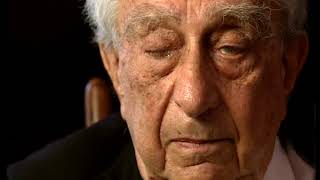
Hungarian-American physicist, Edward Teller (1908-2003), helped to develop the atomic bomb and provided the theoretical framework for the hydrogen bomb. He remained a staunch advocate of nuclear power, calling for the development of advanced thermonuclear weapons. [Listener: John H. Nuckolls]
TRANSCRIPT: I testified and in my testimony I still talked, I believe, positively about Oppenheimer. I said- I feel very confident that he never did anything that was intended to harm the United States. That is as far as I went. Then I was cross-examined by Oppenheimer's lawyer, and he asked me more explicitly- You have to tell us, should Oppenheimer be cleared or not? And then I did something which I regret. I said- As far as intentions are concerned he should be cleared. But many of his actions are complicated, I don't understand them, and I would like to see the security of the United States in hands which I understand better and therefore can trust. I said that under oath and, being under oath, I don't think I could have said less. But I tell you what I regret. I should have then and there told the story, Robb showed me the testimony, and that is the kind of thing which makes me sufficiently doubtful so that I cannot support Oppenheimer's clearance. What I said did not anywhere mention the hydrogen bomb and that was not in my mind. What was primarily on my mind is what I have heard about Oppenheimer's connections and specifically Oppenheimer's own testimony. But what I said has been misunderstood and could be easily misinterpreted as to saying that I didn't like Oppenheimer's actions on the hydrogen bomb and that is why I don't recommend his continued clearance. All of this had really hard consequences on me. My life from beginning to end was closely connected with science and not only with science, but with scientists. I don't like to think alone. I like to debate. I like to collaborate. That's what I did all my life. The way how I testified and the way how my testimony was interpreted separated me from most of the American physicists and this over the years, over the decades hurt me more and more. From my point of view in all of this, there is a bright spot. There were some whose friendship I did not lose and they included all of my Hungarian friends. People like Eugene Wigner, like Johnny von Neumann, understood, perhaps even in- approved of what I had said.
,1,To hear more of Marvin Minsky’s stories, go to the playlist: https://www.youtube.com/watch?v=CB2SsvcECzI&list=PLVV0r6CmEsFxJatFYBb7P4NZscvJw1f0r
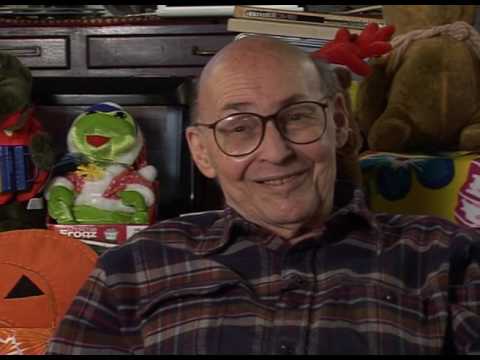
The scientist, Marvin Minsky (1927-2016) was one of the pioneers of the field of Artificial Intelligence, having founded the MIT AI Lab in 1970. Since the 1950s, his work involved trying to uncover human thinking processes and replicate them in machines. [Listener: Christopher Sykes; date recorded: 2011]
TRANSCRIPT: I don’t think it was an important part then, except that since people were going to Japan and getting killed in this period it was a great relief. And for several days after the news came out I was convinced that this was actually a… a hoax, because Hiroshima was a port city, and so I assumed that in fact somebody had equipped a barge with a few thousand tons of TNT, just as the cliché went, and they’d slipped this barge into the harbor, and then they flew a little airplane over and dropped something and set off this bomb. And so I assumed this was a great trick for fooling the Japanese into thinking we had an atomic bomb.
But Nagasaki wasn’t so accessible, so… I think many people must have wondered, why… why did we drop two bombs? Why wasn’t one enough? My first thought was that it was to convince them that it wasn’t a hoax. A few years later then, I met Oppenheimer for the first time when I was in graduate school at Princeton, and he was very hospitable… and tragic.